
This post may contain affiliate links, including those from Amazon Associates. If you make a purchase through these links, I may earn a commission at no additional cost to you. Learn more about our affiliate policy.
There are afternoons when I walk through my own home and feel something before I can name it. A slight tightness, a low-level urge to be somewhere else. Not because anything is wrong. Just because the space has accumulated too much.
Too much visual noise, too many things sitting in the wrong places, and spaces like that have a way of pressing back.
What I keep returning to is this: the smallest edits often shift the feeling the most. And most of them don’t cost a thing. They ask for attention, not money. A willingness to slow down long enough to notice what the space is doing to you.
These seven edits are where I start whenever the house stops feeling like a place I want to be in.
They take minutes. They use what you already own. And they work at the level where calm actually begins. At the nervous system, not the surface.
Seven Free Edits to Start Today
Here’s what we’ll cover in this post:
- Why one cleared surface can change the feeling of an entire room
- A simple lighting shift that signals your body to slow down
- How fresh air works on the nervous system in ways that cost nothing
- Using natural textures you already own to create a calm home atmosphere
- How to create a quiet corner without buying anything new
- Why your pathways matter more than your decor
- Natural scent as a grounding tool, not a fragrance statement
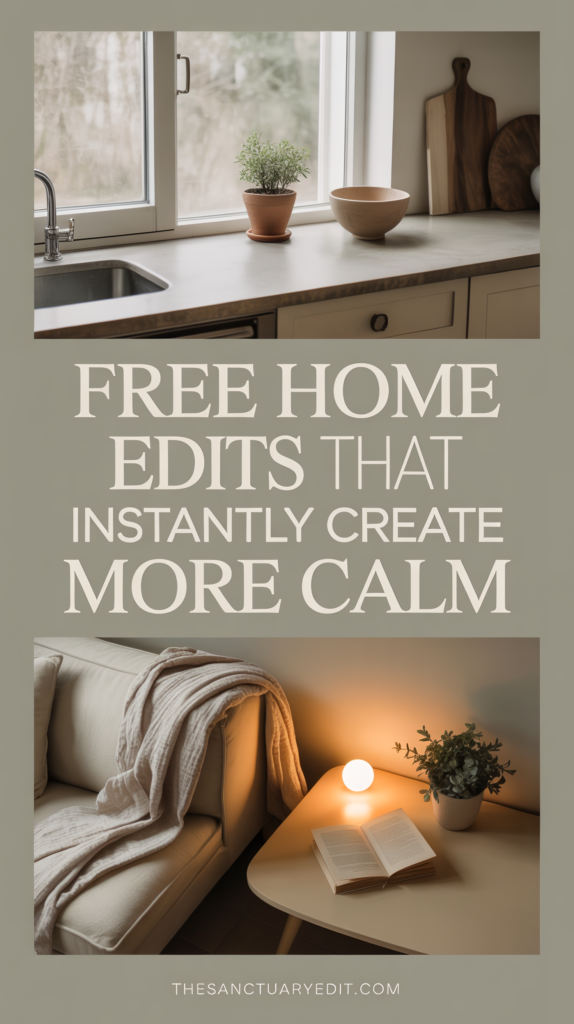
Start with One Surface, Not the Whole Room
The impulse to declutter everything at once is understandable. And it almost always leads to stopping halfway through, with more chaos than when you started.
A more sustainable entry point: pick one surface that sits in your direct line of sight throughout the day. The kitchen counter you face while making coffee. The coffee table you see from your usual seat. The entry console that greets you when you walk in.
Remove everything from it except one or two objects that are genuinely there on purpose.
The brain registers a cleared surface as safety. Not because it looks magazine-worthy. Because the visual field has fewer things competing for attention, and that reduction in competition reads as calm at a very basic neurological level.
This single edit changes the felt quality of a room even when nothing else has moved. It costs nothing and takes under five minutes. It is always where I start.
If the urge to go further is there, how to start decluttering your house without overwhelm walks through a gentler approach that won’t derail your afternoon.
Turn Off the Overhead Light
Overhead lighting is practical and often harsh. It flattens a room, activates alertness, and makes evening feel like an extension of the workday.
For the hours between late afternoon and sleep, try turning it off entirely and using only what you have available at lower levels. A table lamp moved from another room. A battery-powered candle on the counter. The under-cabinet lights in your kitchen.
If ambient lighting is limited right now, these small adjustments cost very little and change everything:
- Swap one bulb to a warm-toned option (2700K or lower, a single bulb runs a few dollars)
- Set a battery LED candle on any surface you look at in the evening
- Move a floor lamp from a low-traffic room into the space where you spend most of your time
Layered, warm light tells your nervous system that the day is winding down. The body reads dim, amber-toned light the same way it reads dusk. That cue doesn’t require a renovation or a new fixture. It requires a different relationship with the overhead switch.
If lighting is something you want to address more intentionally, this guide to fixing harsh lighting with simple swaps is a natural next step.
Open a Window
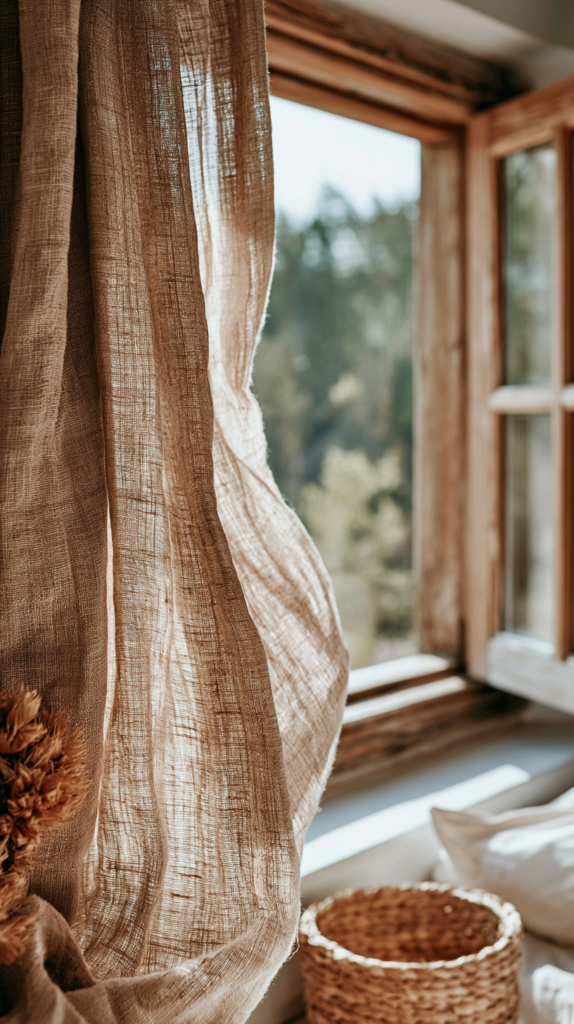
This is the simplest edit and one of the most underestimated ones.
Stale air accumulates slowly, and so does the subtle feeling of being closed in. We often don’t notice it until we step outside and feel the difference. Fresh air, even for ten or fifteen minutes, shifts the sensory quality of a space in a way that is difficult to replicate otherwise.
If you can, open windows on opposite ends of your home to allow for cross-ventilation.
Let in whatever sound comes with it. Wind, birds, a distant street. Outside sound reminds the nervous system that the world is larger than four walls, and that small reminder is often exactly what an overstimulated body needs.
Nothing about this costs anything. It just requires remembering to do it.
Bringing the outside in doesn’t stop at fresh air, these easy ways to bring nature indoors cover the small, no-cost moves that deepen that same effect
Bring Natural Textures Into View
You likely already own what you need for this one.
A linen or cotton throw. A wooden tray or cutting board. A ceramic bowl. A woven basket.
These materials carry subtle surface variation that the brain reads as authentic and non-threatening, unlike synthetic materials, which signal a manufactured environment and can subtly increase alertness.
Move a few natural pieces into the spots you look at most:
- Drape a linen or cotton throw over a chair arm or the back of a sofa
- Set a wooden cutting board on your counter as a tray for small items
- Move any pottery, ceramics, or baskets to a surface in your eyeline
This is one of the core ideas in creating a slow living home: not buying more things, but bringing the right things forward. Natural materials that were stored away or underutilized often do more for the feeling of a space than anything new could.
You can find more on this kind of intentional rearranging in easy slow living home swaps that calm your nervous system.
Create One Quiet Corner
A quiet corner does not need to be a dedicated reading room or a fully styled nook.
It’s a spot in your home with one clear purpose: slowing down. A chair near a window. A floor cushion in a low-traffic area. A small side table with a single candle and whatever you are currently reading.
What matters most is that this corner is not used for work, for scrolling, or for storing things that have nowhere else to go. It holds one intention, and that intention is rest.
When your body knows where it is allowed to be still, it begins to go there. The nervous system learns through repetition. A corner that consistently signals “this is for you” becomes one that actually pulls you in.
If you don’t have a chair to spare, a folded blanket on the floor is enough. The location matters less than the commitment to keep it for one purpose only.
If you want to take this further, how to make a calm hygge reading corner is a good guide, and if you’re working with limited space, this version for tiny apartments still delivers.
Walk Your Main Pathways
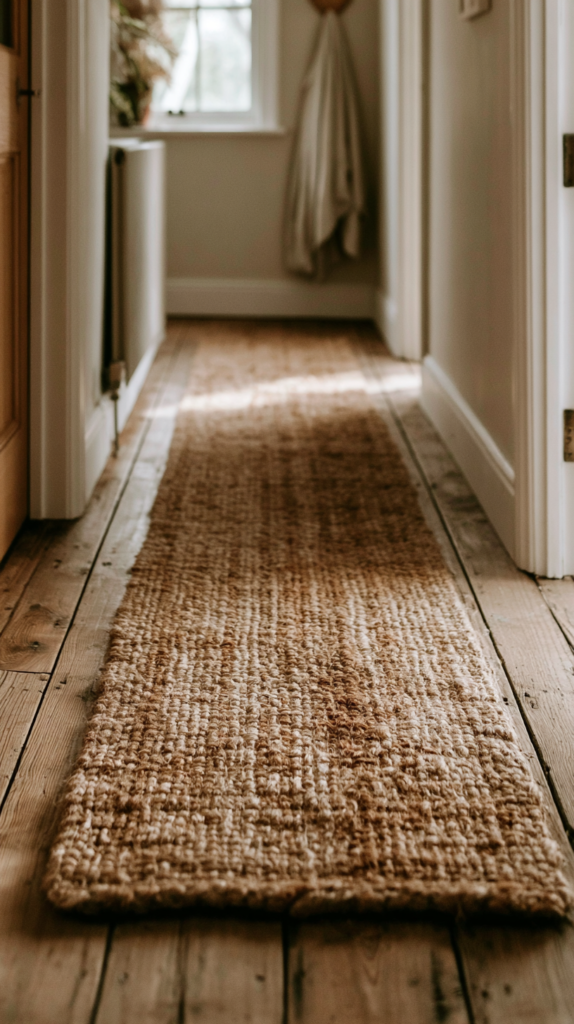
This edit has nothing to do with how a space is styled. It has everything to do with how the body moves through it.
Walk the routes you travel most: from the front door to the kitchen, from the bedroom to the bathroom, from the couch to wherever you make your morning coffee.
Notice anything that sits in the path. Bags set down and not moved. Shoes piled at a threshold. Items waiting to be carried elsewhere.
The body is always registering whether movement feels easy or obstructed. That registration happens below conscious thought, which is why a blocked hallway can make an otherwise calm home feel subtly tense without being able to say why.
Clear one main path completely. Notice how moving through the house changes when there is nothing in the way.
Ease of movement signals that the space is organized around your comfort. That signal matters more to the nervous system than most decor choices.
Add One Natural Scent
Scent reaches the brain faster than almost any other sensory input. It bypasses cognitive processing and lands directly in the limbic system, which governs mood and stress response.
Most commercial air fresheners and synthetic sprays are more stimulating than calming, because of their intensity and their artificial profile. Natural scent doesn’t need to be expensive or elaborate to do its job.
Try one of these:
- Eucalyptus stems in a vase of water near a light or heat source
- A small bowl of dried lavender on a nightstand or shelf
- Fresh rosemary or mint left in a glass on the kitchen counter
- A soy or beeswax candle with a single essential oil note like cedarwood, vetiver, or orange
The goal is not fragrance. The goal is grounding. A scent that is subtle, natural, and consistent tells the nervous system it is somewhere familiar and safe.
Closing Reflection
A calm home is not built in one afternoon.
It grows from small choices made with intention over time. A surface you tend to. A lamp you turn on instead of the overhead. A corner you keep clear for nothing but sitting.
Start with one edit from this list, just one. Stand in front of the space you look at most, make the smallest possible change, and stay long enough to notice what shifts.
That shift is what your home is here to offer. For help building a consistent rhythm around these kinds of edits, this guide on how to create a weekly home reset that supports your nervous system is a good next step.

