
This post may contain affiliate links, including those from Amazon Associates. If you make a purchase through these links, I may earn a commission at no additional cost to you. Learn more about our affiliate policy.
Sunday evenings used to feel heavy for me. The house carried the week’s clutter, piles of mail, laundry half folded, a kitchen that had absorbed too much noise.
I noticed my body would tense as I looked around. Mondays arrived before I felt ready.
When I began experimenting with a weekly reset, that shifted. By setting aside a little time to clear, soften, and reset, the whole house seemed to breathe differently. And so did I.
A weekly home reset is about creating a rhythm that signals calm to your nervous system, giving both you and your space a moment of relief.
If you’d like a deeper foundation in how your environment affects your body, you can also explore the guide How To Create a Peaceful Home That Supports Nervous System Regulation.
Before You Begin
Before you move into the reset, take one slow look around your home and notice what feels the loudest. It might be visual clutter, dishes, laundry, stale air, or the feeling that too many things are unfinished.
You do not need to fix the entire house. Choose the one area that would create the most relief if it felt lighter.
A helpful question to ask is:
What would help my body feel more settled in this space by tonight?
What This Weekly Home Reset Includes
This reset is designed to be simple, calming, and flexible. You can move through the whole rhythm in under an hour, or choose only the pieces your body and home need most that week.
- A simple surface declutter
- A light kitchen and bedding refresh
- A sensory reset with scent, light, air, or sound
- A simple glance at the week ahead
- A final pause that helps your body feel complete
Why a Weekly Reset Matters
Your nervous system is always scanning your environment for cues of safety. When your home feels cluttered or chaotic, it can keep your body in a subtle state of alertness. A weekly reset interrupts that cycle.
By restoring order and inviting softness, you create a rhythm your body begins to anticipate.
Over time, this routine can act like a grounding practice that reduces decision fatigue, restores a sense of control, and gives your week a calmer starting point.
Think of it less as “cleaning” and more as tending. You are tending your home the way you might tend a garden, offering it what it needs to grow in peace.
How Clutter Affects The Body
Clutter does not only take up physical space. It can also create visual decisions the brain keeps trying to process in the background.
A pile of mail may quietly ask to be sorted. Laundry may remind you it still needs finishing. Dishes may signal that rest has not yet arrived.
A weekly reset helps close some of those open loops, giving your mind fewer things to hold at once.
Laying the Groundwork

A reset works best when it has its own rhythm.
Choose a time that naturally fits your week. Sunday evening is common, but it might also be Friday morning or a quiet Monday afternoon. The important part is consistency.
Your nervous system thrives on rhythm.
For more small home habits that keep this sense of calm going between resets, read 11 Slow Living Habits that Keep Your Home Clutter Free.
Begin with a simple cue that marks the transition. Light a candle. Put on soft music. Open a window for fresh air.
If lighting is one of the things that makes your home feel tense or overstimulating, these simple swaps for fixing harsh lighting can help soften the whole atmosphere.
These sensory signals shift the mood and remind you that this is not about pressure, it’s about restoration.
Declutter and Visual Calm

Focus on the places that carry the most weight for you. For many, it’s the surfaces like the coffee table, the nightstand, the kitchen counter.
These are the spots the eyes land on again and again, and if they’re cluttered, the nervous system registers busyness.
Spend just fifteen minutes clearing one or two areas. Use baskets or trays to gather loose items. Limit what stays in view to only what feels meaningful or useful.
Even small progress here reduces visual noise and signals calm.
The One-Surface Rule
If your home feels overwhelming, begin with one surface only. A kitchen counter, nightstand, coffee table, or entry table can shift the feeling of an entire room.
Clear it completely, wipe it down, and return only what belongs there.
This small act gives your eyes a place to rest, which can help your body feel less surrounded by unfinished tasks.
If you want to go deeper with gentle clutter habits, this guide on how to start decluttering your house without overwhelm is a natural next step.
Functional Preparation
A reset also prepares your home to support you in the days ahead. Wash your bedding so the week begins with fresh linens. Empty the trash.
Do a light kitchen reset with dishes cleared, counters wiped, a pot ready for morning tea or coffee.
These acts may feel small, but they reduce friction in the days that follow. The nervous system relaxes when it senses readiness instead of unfinished work.
Reduce Tomorrow Morning Friction
A nervous-system-friendly reset should make the next morning feel easier.
Before you finish, choose one small thing that will support your future self:
- Set out your mug or tea
- Prepare breakfast basics
- Place your keys where they belong
- Choose clothes for the morning
- Clear the first surface you will see when you wake up
These small preparations create a softer entry into the week.
Nourish the Space and the Senses

Once the basics are in place, add touches that engage your senses in gentle ways.
Replace towels or throws with fresh ones. Diffuse a calming scent.
Bring a small natural element indoors, like a branch in a vase or a sprig of herbs on the counter.
These sensory details communicate care. They turn the reset from a task into a ritual.
Mindful Planning

Consider using part of your reset to glance ahead at the week. Keep this simple.
Write down the three most important things to focus on, or make a short list of meals. Journaling or doing a quick brain dump clears mental clutter in the same way decluttering clears surfaces.
The goal is not to plan every detail, but to reduce the background noise in your mind. Your nervous system feels steadier when you’ve externalized the things competing for attention.
A Pause That Feels Like a Gift
One of the most important pieces of a nervous system–friendly reset is rest itself. After you finish your small edits, allow yourself to pause.
Make tea. Read for a few minutes. Step outside. This final touch tells your body that the reset isn’t about productivity, it’s about renewal.
If you want this pause to feel even cozier, explore these simple hygge decor ideas for a relaxing home.

Weekly Home Reset Checklist
Use this as a light guide rather than a strict list.
- Clear one or two visible surfaces
- Put away loose items in baskets or trays
- Refresh bedding, towels, or blankets
- Empty trash and reset the kitchen
- Open a window or refresh the air
- Add one calming sensory detail
- Write down three priorities for the week
- Pause with tea, reading, prayer, or quiet
Room-by-Room Reset Rituals
Living Room
Clear the coffee table and tuck away remotes or chargers. Light a lamp instead of using overhead lights. Place a plant, candle, or small natural object on a side table to soften the space. To make this space feel even more restorative, try these easy ways to make your living room feel peaceful and relaxing.
Bedroom
Change the sheets and smooth the bedding. Clear your nightstand so it holds only what feels soothing, such as a candle, a book, or a small vase. Turn off screens early and let the room become a quiet signal for rest. For a deeper bedroom refresh, this guide to creating a peaceful small bedroom retreat with natural decor pairs beautifully with a weekly reset.
Entryway
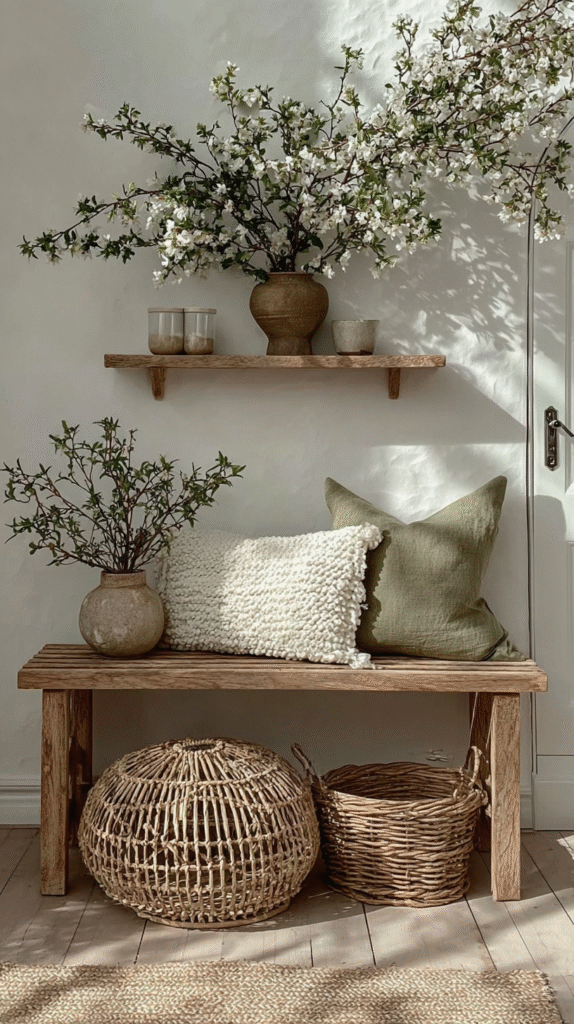
Reset this space as a gentle threshold between outside and inside. Contain shoes or mail in baskets. Add one natural focal point, like art or greenery, to greet you as you come home.
Mini-Resets for Busy Weeks
Life doesn’t always leave space for a full weekly reset. On those weeks, try a micro version.
- Five minutes clearing one surface
- Lighting a candle before dinner
- Opening a window each morning
- Playing calming music while doing dishes
These tiny resets keep your home aligned with calm even when time is limited. They remind your body that regulation is still possible in small moments.
Staying Gentle with Yourself
The most important part of a weekly reset is the spirit in which you approach it. This isn’t about doing everything or doing it perfectly. Some weeks will feel smooth, others messy. Both are fine.
Your nervous system doesn’t need perfection. It needs cues of care and safety. Missing one reset doesn’t erase the progress of all the others. Begin again whenever you’re able, and let that be enough.
Closing Reflection
A weekly home reset is less about what you accomplish and more about what it communicates: here is a space that supports calm. Here is a rhythm that reminds your nervous system it can exhale.
You don’t have to do it all. Begin with one or two elements that feel manageable, perhaps fresh sheets, a candle, or clearing the nightstand. Over time, these rhythms accumulate into a home that feels like a steady companion in your week.
If you want to build this into a larger home rhythm, start with How To Start A Slow Living Home One Room At A Time.
Your home becomes a partner in your regulation. A sanctuary that holds you, gently and consistently, as you move through the demands of life.

