
This post may contain affiliate links, including those from Amazon Associates. If you make a purchase through these links, I may earn a commission at no additional cost to you. Learn more about our affiliate policy.
The bathroom is where the day actually starts.
Before coffee, before the to-do list, there is this room, and the ten or fifteen minutes you spend inside it.
For most of us, it does not match the calm we are trying to cultivate. The spa like bathroom ideas that circulate online tend toward renovation or expensive overhauls.
But most of what makes a bathroom feel like a sanctuary has nothing to do with square footage or a remodel.
It has to do with what you have chosen to put in it. These twelve natural swaps are here to show you that.
Twelve Swaps Worth Starting With
What you will find in this post:
- Countertop and surface edits for visual calm
- Shower changes that shift the sensory experience
- Textile swaps for touch and warmth
- Lighting changes that ease the morning transition
- Simple nature additions that cost almost nothing

Start with What You Touch First
The first physical contact of a morning matters more than it seems.
A cold plastic soap dispenser, a synthetic mat underfoot, paper towels that require a reach and a tear. These things accumulate into a background hum of friction that the nervous system registers, even if the mind does not.
Swap 1: Replace plastic soap dispensers with ceramic or glass.
The weight of a ceramic container, cool and substantial in the hand, signals that the space was considered. That communicates something to the part of the morning that needed to hear it.
Swap 2: Replace your bath mat with one made from natural fibers.
Organic cotton, woven cotton, and jute mats feel different underfoot. They dry faster and soften with washing. The texture itself is less processed, and the nervous system registers that.
Swap 3: Replace paper towels with a small stack of linen hand towels.
This swap feels indulgent at first, and then quickly becomes the thing you never want to give up. Small acts of friction reduction accumulate into mornings that feel genuinely different. The reach for linen instead of paper is one of them.
A Quieter Countertop
The countertop carries more visual load than almost any other surface in the bathroom.
Multiple bottles in varying heights, miscellaneous objects, packaging in different colors. It reads as busy even on a good day. The goal is not to strip it bare, just to make what remains feel chosen.
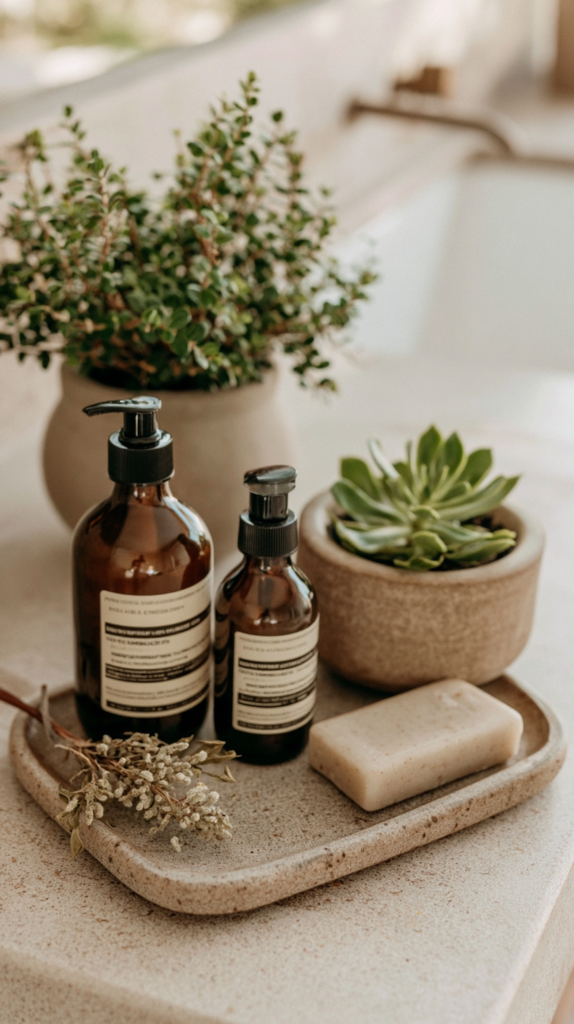
Swap 4: Decant your daily products into matching containers.
Amber glass, ceramic, or matte frosted bottles in the same family create visual cohesion. The counter looks edited, not sparse.
Swap 5: Remove anything that does not belong to the daily routine.
Extra bottles, tools that migrated from elsewhere, items with no clear home. Relocate them. What remains should feel intentional. If the countertop edit feels like the right place to start, a 15-minute daily decluttering routine can make it a lasting habit.
Swap 6: Add one organic element.
A smooth stone on a small tray, a dried botanical in a low vessel, or a single plant in a ceramic pot. The organic shape interrupts the hard geometry and softens the surface.
For more on how natural decor ideas work across the whole house, how to style natural textures for a cozy minimalist home is a good companion read.
The Shower as a Reset Point
The shower is often the one moment in a morning routine where the nervous system has space to settle.
The water is warm, the door is closed, and there is nowhere else to be. The environment inside that moment matters.
Swap 7: Decanted glass or ceramic dispensers in place of plastic bottles.
When you reach for shampoo through amber glass with morning light behind it, the experience is different than squeezing a squeeze bottle. One keeps you present. The other pulls you back into the ordinary.
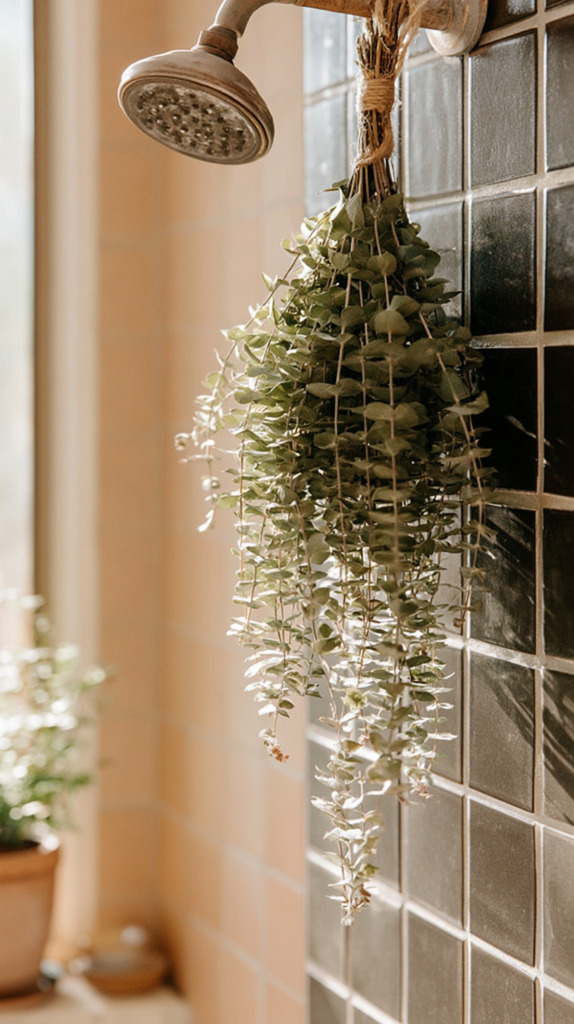
Swap 8: A bundle of dried eucalyptus or lavender hung from the showerhead or hook.
Steam activates the natural oils and the scent becomes part of the experience. This is one of the lowest-cost swaps in the list and one of the most immediately sensory. No diffuser, no maintenance, no effort. Just a bundle replaced every few weeks.
Swap 9: A natural sea sponge or sisal mitt in place of a synthetic loofah.
Natural sponges last longer, feel more substantive, and add a natural coherence to the shower that costs almost nothing. The ritual of washing becomes more considered.
Warm the Light
Bathroom lighting defaults to bright and overhead, designed for function and nothing else.
That is not a bad choice. But it is doing nothing to ease you into the day.
Swap 10: Warm-toned bulbs in place of cool white ones.
A bulb at 2700K or lower changes the quality of the whole room. Warm light before 9am is one of the highest-leverage changes in this list. It shifts the room from a space that activates to one that settles, and it costs nothing more than a bulb swap.
Explore more ways to fix harsh lighting in your home with these swaps.
Swap 11: A small candle as part of the countertop ritual.
Not as decoration. As a small act of intention. Lighting a candle at the start of a morning is a signal: this time is yours, and it is worth tending to. Soy or beeswax in a simple ceramic container keeps it in the natural register of everything else.
What Hangs and Holds
Towel bars, hooks, and bath textiles are the easiest things to overlook.
They were chosen once, and they became invisible. But they contribute to the overall sensory register of the space in ways that add up.
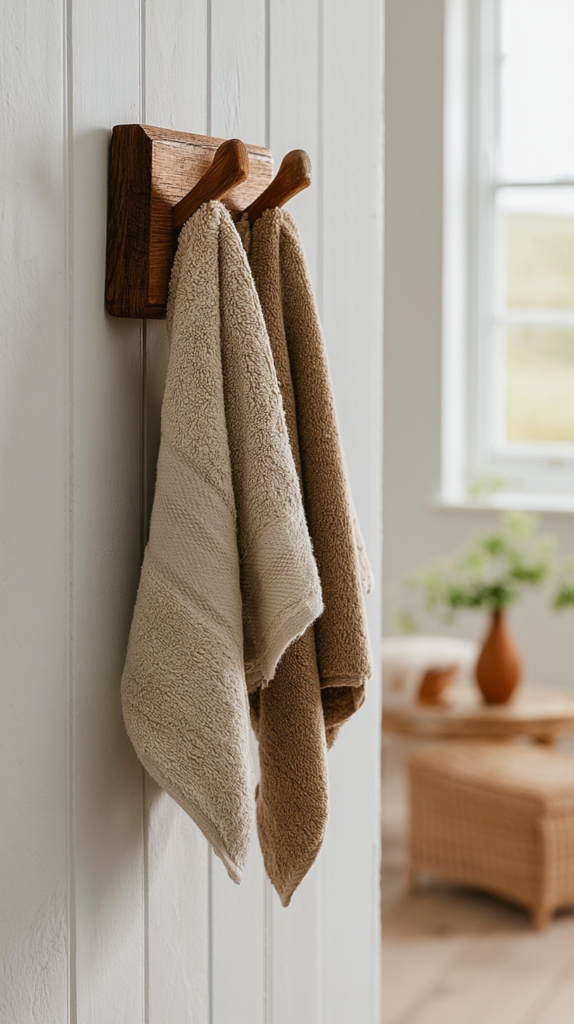
Swap 12: Wooden or rattan hooks and rings in place of chrome or plastic hardware.
Natural material hardware reads warmer than chrome. The difference is subtle and the effect is disproportionate to the cost. Pair this with the right textiles and the wall becomes a detail rather than an afterthought.
A few more textile choices worth reconsidering:
- Towels in muted earthy tones rather than bright white, which reads as clinical rather than calm
- Organic cotton or linen towels rather than synthetic blends, which feel different against skin
- Retiring towels that have thinned out over time, because worn textiles register as wear even if they are still functional
These are the kinds of slow living home swaps that calm your nervous system: small, not expensive, and honest.
The Swaps That Stay
You do not need to make all twelve changes at once.
Most of the results people notice come from two or three swaps made with intention, lived with for a while, and observed before moving on.
That is the rhythm this kind of change asks for. If that rhythm appeals to you, these slow living morning routines offer an easeful structure for what comes next.
A bathroom that feels calm is not built from a renovation. It is built from honest choices, made one at a time. Natural over synthetic. Clear over cluttered. Considered over convenience.
And the morning that starts inside it begins to feel like something you were glad to wake up for.

