
This post may contain affiliate links, including those from Amazon Associates. If you make a purchase through these links, I may earn a commission at no additional cost to you. Learn more about our affiliate policy.
The thing I remember most about my first truly organized bedroom is the morning after I cleared it. Not the evening I spent doing it, though that had its own quiet satisfaction.
The morning after, when I walked in still half-asleep and the room simply held nothing that didn’t belong there. That particular quality of rest starts before you close your eyes.
It starts with what the room is communicating while you’re still awake in it, and whether it is asking something of you or finally leaving you alone.
Where We’re Starting
- Why a tiny bedroom makes clutter feel louder than it would anywhere else
- The bedside area and why it matters more than any storage bin
- How to clear the floor before adding any organization
- Bedroom organization ideas scaled for a small footprint
- What most small bedrooms are holding that doesn’t belong there
- One surface worth attending to once the rest is clear
When a Bedroom Is Small, Everything in It Is Louder
In a larger room, a pile of things in the corner can recede. In a tiny bedroom, nothing recedes. Every object is close enough to register, and the nervous system reads all of them before you’ve sat on the edge of the bed, before you’ve turned off the light.
Visual clutter in a sleep space does something specific to the body.
It tells it that there are still things to process, still decisions pending, still items waiting for their proper place. That signal does not stop when the light goes out. It is one of the reasons a small bedroom that is well organized feels dramatically different from one that is not.
Smallness, when it is working in your favor, means there is actually less to clear than you might think.
Begin at the Bedside
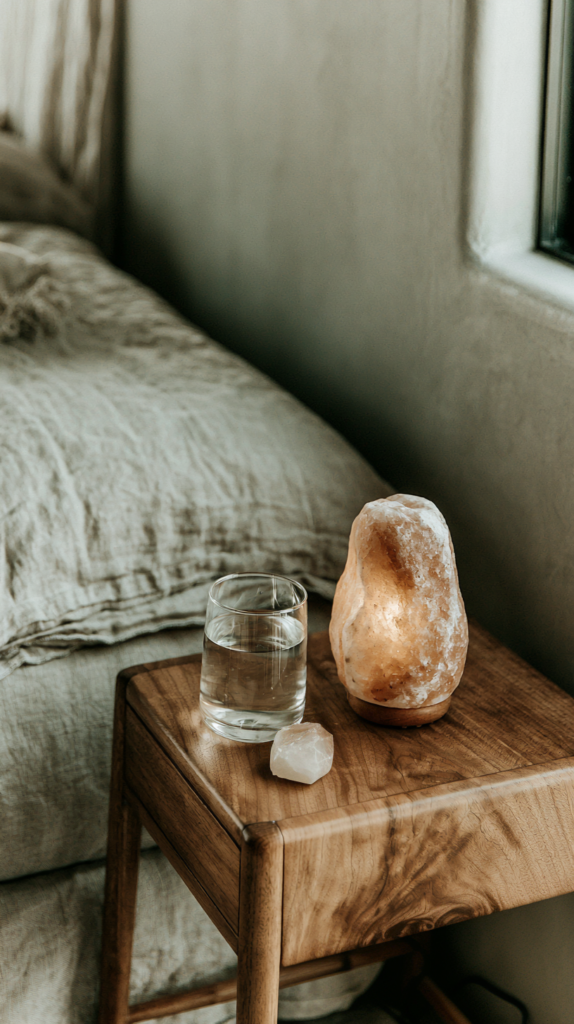
The most important surface in any bedroom is the one your eyes rest on as you fall asleep. In a tiny bedroom, the bedside area, whether a nightstand, a small stool, or a simple wall shelf mounted low, is often where bedroom organization efforts stall.
It is usually already holding too many things because it is within reach. Clear it completely.
Then return only what belongs in the hours before sleep:
- One lamp, warm-toned, placed at or just below eye level when lying down
- Something to read, if reading is part of how you wind down
- A glass of water
- One small object your eyes can rest on, a smooth stone, a dried sprig, a ceramic piece in a muted tone
The nightstand does not need to hold everything that has ended up on it. It only needs to hold what serves the body in those specific hours.
Everything else is borrowing space it was never meant to occupy.
Clear the Floor Before You Think About Storage
The instinct when a small bedroom feels cramped is to look for more storage solutions. The more useful first step is to look at what does not need to be stored at all.
A cluttered floor in a tiny bedroom communicates to the nervous system that the room is full, even if the clutter is minor. Clear paths and visible floor space register as available resource, as room to breathe, in a way that no storage bins can replicate when the floor beneath them is already crowded.
Before looking at any bedroom organization ideas or adding new containers, take everything off the floor that does not belong there:
- Clothes waiting to be decided about
- Bags and shoes that drift in from the entryway
- Items from other life categories that landed here because the bedroom was nearby
- Anything functioning as a temporary holding area that became permanent
What remains after this kind of clearing usually reveals a smaller, more manageable problem than you expected.
If the process itself feels like too much to approach all at once, how to start decluttering your house without overwhelm offers a room-by-room approach that keeps the process from compounding the very exhaustion you are trying to relieve.
Bedroom Organization Ideas That Work in a Small Space
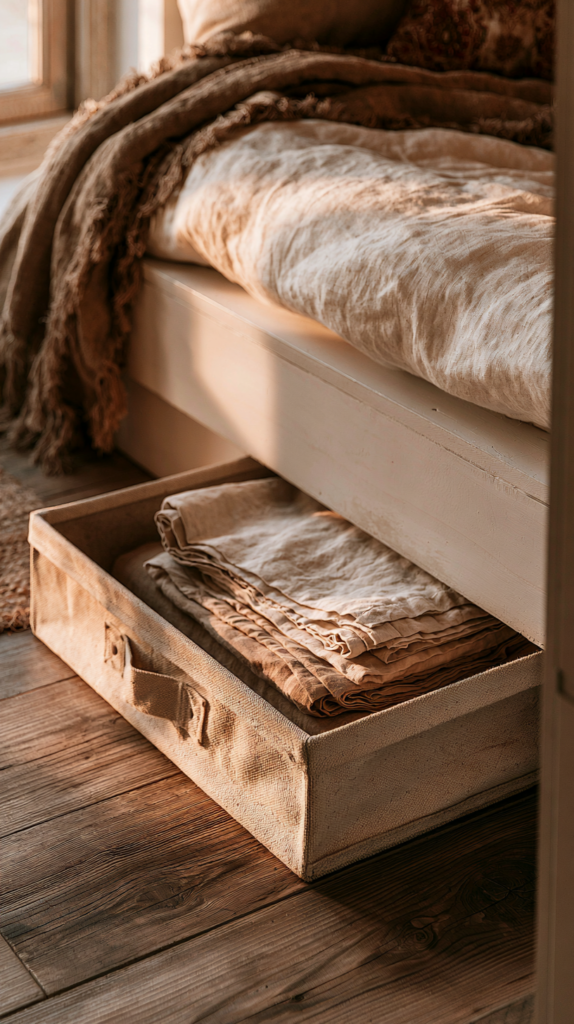
Once the floor is clear and the bedside is pared back, the actual organization work begins. The bedroom organization ideas that create the most significant shift in a small footprint are the ones that move storage vertical, out of sight, or behind a door:
- Under-bed storage in flat bins with lids for seasonal clothes, extra bedding, or anything that needs a home but does not need to be seen. Low-profile bins that slide in and out easily are worth choosing carefully.
- Over-the-door hooks on the back of the bedroom door for bags, tomorrow’s clothes, and a robe. This one addition keeps the floor clear without losing a single piece of function.
- A single shelf at or slightly above eye level for books, a plant, or a few considered objects, used instead of a crowded dresser surface competing for the same visual space.
- Drawer dividers in any dresser you already have. They take almost no time to add and remove the low-level cognitive load of a jumbled drawer where finding anything requires a decision.
- One small basket or tray on the dresser as the only permitted deposit point for small accumulating items. Once it is full, that is the signal to sort and return. The container defines the limit rather than leaving the limit undefined.
None of these are expensive. They are structures that make decisions easier, so the room stops requiring them of you at the end of the day.
What the Bedroom Doesn’t Need
The bedroom that supports rest is the one with the fewest competing signals. Most bedrooms accumulate items from other life categories over time.
Work items placed nearby for convenience. Fitness equipment with good intentions. Paperwork and chargers and things that belong in a hallway or a kitchen but ended up here. Each of these sends a particular message to the nervous system.
They communicate that other demands are nearby, that the room is also a place for productivity and obligation and things not yet finished.
That signal does not stop during sleep. The most consequential bedroom organization decision is often not how to store something but whether it belongs in the room at all.
If it is not directly related to rest, personal care, or dressing, it is worth finding it a home somewhere else. For ideas on making a small bedroom feel genuinely peaceful through the materials and objects you keep, natural elements and considered placement can do as much as organization alone.
The One Surface Worth Attending To
After the floor is clear and the clutter has found other homes, there is usually one surface in a small bedroom that is worth treating with a little care. Often it is the dresser top. Sometimes a narrow shelf or the windowsill.
A dresser that holds a lamp, one small plant, and a single object chosen with intention reads differently than one covered in accumulated things.
It communicates that someone made decisions here. That the room has been attended to rather than merely sorted. The nervous system registers that difference at a level below conscious awareness, the way you feel the shift in a hotel room where the surfaces have been cleared and the light is warm and nothing is asking for your attention.
The Room That Finally Works With You
A tiny bedroom organized for rest is not a luxury, and it does not require a larger space or a design overhaul. It requires a decision about what belongs there and what has simply been allowed to stay.
One cleared floor, one pared-back nightstand, one considered surface, and the room that was asking too much of you before you lay down can become the one that begins to release you the moment you walk in. Start with the bedside. The rest tends to follow from there.

