
This post may contain affiliate links, including those from Amazon Associates. If you make a purchase through these links, I may earn a commission at no additional cost to you. Learn more about our affiliate policy.
There are days when the clutter in your home mirrors the clutter in your mind.
Papers gather on the table, laundry waits in a corner, and the pace of life settles into the room long after you walk through the door. You want a home that helps you breathe instead of making you feel like you are always behind.
Yet the moment you start to clear things, the process feels overwhelming. One small task turns into ten, and suddenly the idea of a clutter-free home feels out of reach.
Slow living shifts this experience. Instead of large bursts of organization that leave you exhausted, it invites you into sustainable habits that work with your real life.
These are habits that honor the nervous system, support your limited time and energy, and create a home that restores you rather than asks something from you.
When practiced consistently, these rhythms keep clutter from taking over and make your home feel more spacious, even when life is full.
If the idea of starting still feels like too much, this guide on how to start decluttering your house without overwhelm will help you begin with small, steady steps that actually stick.
Key Takeaways
- Slow living habits work with your energy and schedule instead of demanding more than you have.
- Small, consistent actions like a daily reset or a 15-minute declutter session do more long-term than occasional overhauls.
- Every object needs a home. When items have a designated place, tidying becomes automatic rather than effortful.
- Slowing the inflow is just as important as clearing what is already there. Intentional purchasing protects the calm you are building.
- Progress matters more than perfection. A cleared counter or a single organized drawer is a real win worth acknowledging.
- Your home reflects your pace. Aligning your space with your values creates an environment that restores you rather than depletes you.
Let Every Object Have a Home
Clutter grows quickly when items float from surface to surface. A designated place for everything prevents the feeling of constant reshuffling. It also reduces the mental load of deciding where things belong each time you tidy.
When you know where an item returns after use, tidying becomes second nature. It becomes a rhythm rather than a project. This clarity gives your home a sense of order that restores your focus and lowers the background hum of overwhelm.
Helpful places to start:
- Create a basket for remotes and small electronics
- Keep a tray on the counter for daily essentials
- Use simple storage for children’s items so they can help return things too
Use the One In, One Out Principle
Most homes become cluttered slowly rather than all at once. New items come in, older ones linger, and eventually every corner feels overfilled.
A simple way to maintain balance is to release one item each time something new comes in.
This habit builds awareness. You pause before purchasing and ask whether you have space for it in your life and home. Over time, this principle protects the calm you’ve worked hard to create.
You might apply it to:
- Books
- Clothing
- Kitchen tools
- Home decor pieces
Practice Micro Decluttering

Long decluttering sessions often require more energy than you have on a typical day. Micro decluttering meets you where you are. Fifteen minutes at a time, one drawer, one shelf, one small basket.
Try this method for a daily 15 minute decluttering routine to build this habit easily.
These small sessions release the pressure to achieve a perfect home in one sweep. They also help prevent decision fatigue. You handle what is in front of you without spiraling into the entire house.
A few places that respond well to short sessions:
- A nightstand
- The bathroom drawer
- Your entryway surface
- A corner of your living room
Build a Daily Reset Routine
The pace of modern life creates layers of visual noise. A daily reset brings your home back to center without requiring a big clean. It is not about perfection. It is about creating enough clarity so you can move through your space without feeling overstimulated.
A reset routine can take ten minutes or less. You return a blanket to the sofa, clear the coffee table, rinse the few dishes in the sink, or tidy a surface that tends to collect mail. These small actions shift the entire room and give your body a cue to settle.
A few reset habits that help:
- Clear one surface before bed
- Light a candle as a signal that the day is winding down
- Straighten pillows or fold a throw
- Place stray items in a small basket to sort later
For a slightly longer rhythm that carries this calm into the week ahead, try a weekly home reset that supports your nervous system, especially if Sundays are when clutter and mental noise tend to pile up.
Designate Drop Zones
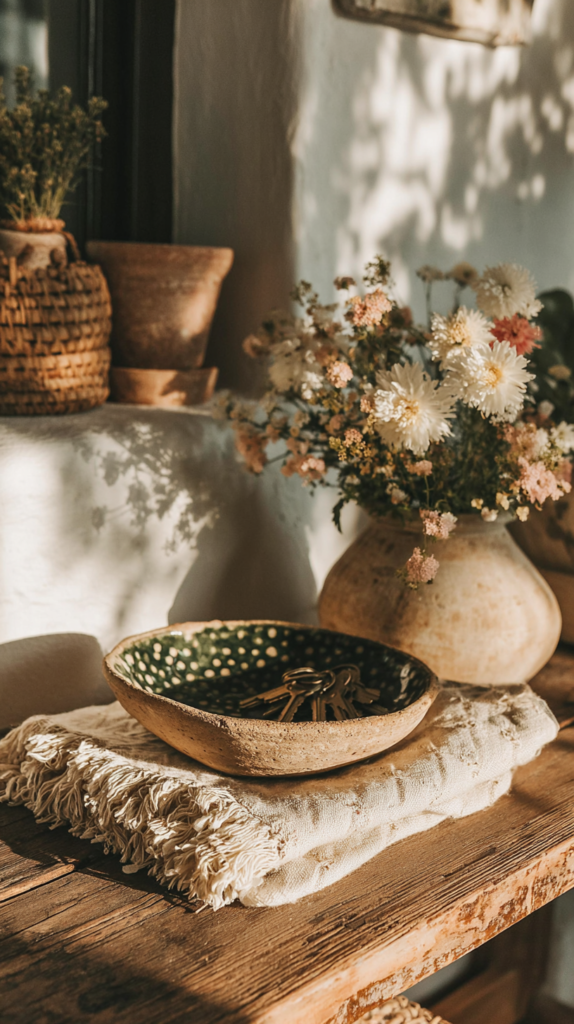
Paper, keys, makeup bags, water bottles, receipts, and charging cords are often the source of clutter that feels endless. Instead of trying to eliminate these items entirely, create intentional drop zones where they can land.
When everything has a temporary home, surfaces stay clear. This keeps daily mess from spreading into every room and protects the sense of calm you are building.
Drop zones can include:
- A tray by the entry for keys and wallets
- A basket for incoming mail
- A drawer for chargers and small electronics
Slow the Inflow
Clutter often signals that too much is coming in too quickly. Slow living invites you to pause before adding something new to your home. The question becomes less about whether an item is beautiful or useful and more about whether it aligns with the atmosphere you want.
This habit breaks the cycle of impulse purchases and comparison culture. It invites presence back into your decisions. You choose items intentionally rather than reactively, which protects your space and energy.
Try asking:
- Do I have something that already serves this purpose?
- Will this item make my life easier or more complicated?
- Does it support the way I want my home to feel?
If you want a gentle foundation for shaping your space with more intention, you’ll love how to start a slow living home when life feels overwhelming, which walks you through small shifts that calm your home without adding pressure.
Do Seasonal or Monthly Reviews

Even with strong habits, clutter naturally accumulates over time. A simple monthly or seasonal review resets your home without requiring dramatic overhauls.
Think of it as a conversation with your space. You notice what is working, what feels heavy, and what no longer reflects your needs.
These reviews prevent the build-up that leads to overwhelm. They also help you stay aware of what you own, which reduces duplicate purchases and encourages gratitude for what you already have.
Focus on areas like:
- Clothing and linens
- Kitchen drawers
- Daily-use surfaces
- Storage baskets that tend to fill without intention
Use Storage Wisely
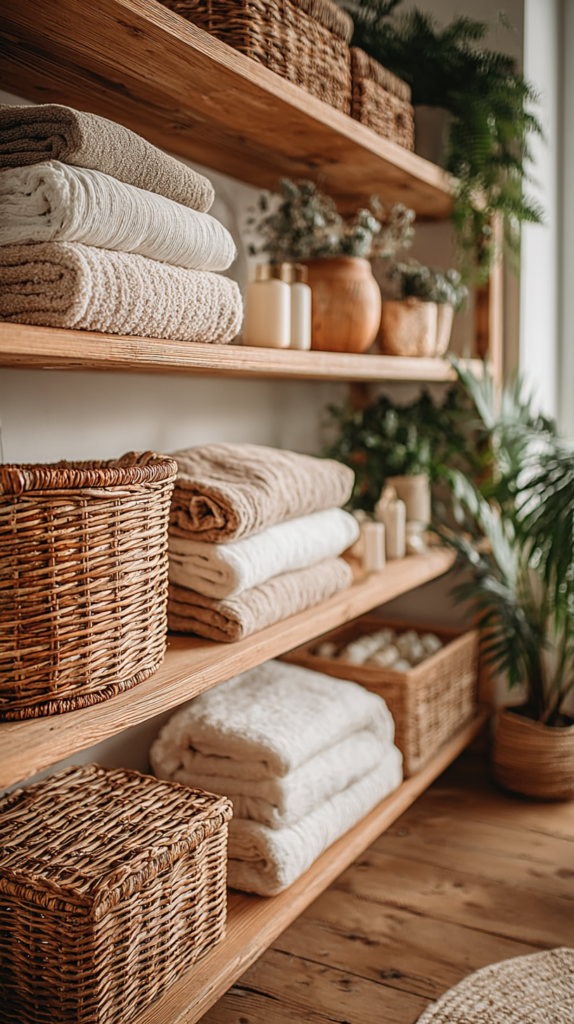
Storage is at its best when it simplifies your life rather than hiding clutter. Think of storage as a way to support daily rhythms. When items are grouped together and easy to access, tidying feels effortless and returning things takes only seconds.
Leave a little space around items whenever possible. Overfilled shelves or packed drawers create visual tension and make it harder to maintain clarity.
Space itself becomes part of your decor and part of the calm you are cultivating.
Supportive storage ideas:
- Clear bins for categories you use often
- Woven baskets for blankets or toys
- Drawer organizers for small items
Let Go of All-or-Nothing Cleans
Many women experience a sense of defeat when they cannot maintain a perfectly clean home. The expectation that everything must be done all at once leads to burnout. Slow living shifts this mindset. You let your home evolve gradually and respond to your real capacity.
Instead of waiting for the perfect weekend to reset your home, you work with the moments you have. A few minutes here, ten minutes there. This makes the process sustainable. It also releases the shame that often comes with traditional decluttering approaches.
Align Your Space With Your Values
A home becomes cluttered not only because of what we bring in, but also because we lose sight of what matters. When you align your space with your values, you create clarity. You keep items that support your wellbeing and release what distracts you.
This is not a minimalist rule. It is an act of self-trust. You learn to recognize what feels nourishing and what feels heavy. Your home begins to reflect the life you want rather than the pace you are trying to escape.
Questions that help:
- Does this item bring calm or contribute to mental noise?
- Does it support my daily rhythms?
- Does it reflect who I am becoming?
Celebrate Small Wins
Clutter-free living is not a destination. It is a series of small choices made over time. When you pause to acknowledge what is working, you reinforce habits that feel aligned instead of exhausting.
A cleared counter, an organized shelf, or a donation bag ready for drop-off is a meaningful shift. These moments build a sense of progress. They remind you that your home does not need to be perfect to support your wellbeing. It only needs to evolve with you.
Closing Reflection
Your home responds to the way you move through it. When you shift your habits toward a slower rhythm, clutter loses its grip. Each of these small practices shapes an atmosphere that feels light and supportive.
There is no need for a full reset every week. You are creating a home that stays steady even when life is full.
Slow living habits bring clarity, space, and calm into the everyday. Over time, these rhythms protect your energy and give you the sense of ease you have been craving. This is how clutter-free living becomes less of a task and more of a way of being.