
This post may contain affiliate links, including those from Amazon Associates. If you make a purchase through these links, I may earn a commission at no additional cost to you. Learn more about our affiliate policy.
There are moments when your home feels clean and orderly but still not entirely comforting. You appreciate the calm of minimalism, yet the space feels like it needs more warmth and presence.
This tension is common for women who crave clarity and comfort at the same time. Natural textures offer the bridge between these two needs. They add depth, warmth, and emotional resonance without adding clutter or overwhelm.
When styled well, natural textures transform a minimalist home into a space that feels lived in and restorative. They allow your home to feel both visually calm and deeply comforting.
To go deeper, you may also enjoy the post How To Blend Calm and Comfort With Cozy Minimalist Design.

Understand the Role of Texture in Minimalist Spaces
Minimalism creates clarity, yet it can feel cold if every surface is smooth or flat. Texture introduces the sensory engagement that makes a space feel inviting without sacrificing visual rest. The right textures bring depth and dimension, which helps the home feel grounding instead of empty.
This is especially important if you often feel overstimulated by clutter. Minimalism reduces distractions, but texture brings the warmth your nervous system responds to. Together they create a supportive home environment that feels simple and comforting.
Consider these reflection prompts:
- Where does your home feel flat or uninviting?
- Which surfaces feel hard or unwelcoming to touch?
- What textures feel calming to your body?
- What materials do you naturally gravitate toward in stores or nature?
These questions help you understand what textures will best support the atmosphere you want to create.
Choose Your Core Natural Materials
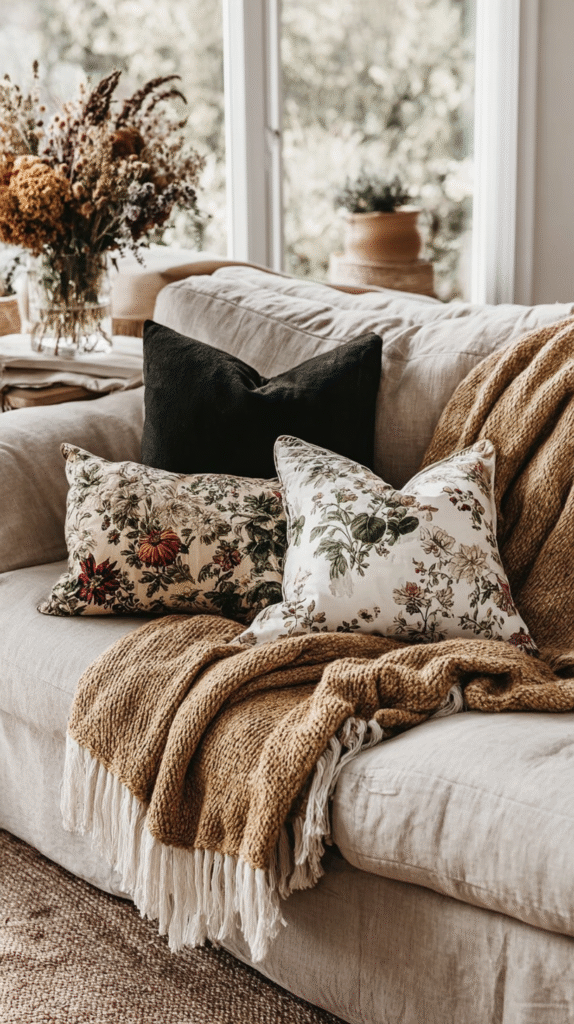
Natural textures carry an ease that synthetic materials rarely offer. Wood, stone, linen, cotton, wool, jute, and woven fibers all bring life and grounding into a space. They connect your home to nature, which supports a sense of calm after long days of screens, errands, and overstimulation.
You do not need every material all at once. Choose one or two to anchor your design. This keeps your space cohesive and prevents the room from feeling overly busy.
A few foundational materials include:
- Light or medium-toned woods for furniture or accents
- Matte stone or ceramic bowls, trays, or vases
- Linen or wool textiles for curtains, cushions, or throws
- Woven baskets or jute rugs for storage and grounding
Start with the textures that feel most comforting to you. Their presence alone can shift the emotional tone of the room.
Layer Textures Strategically for Visual and Tactile Comfort
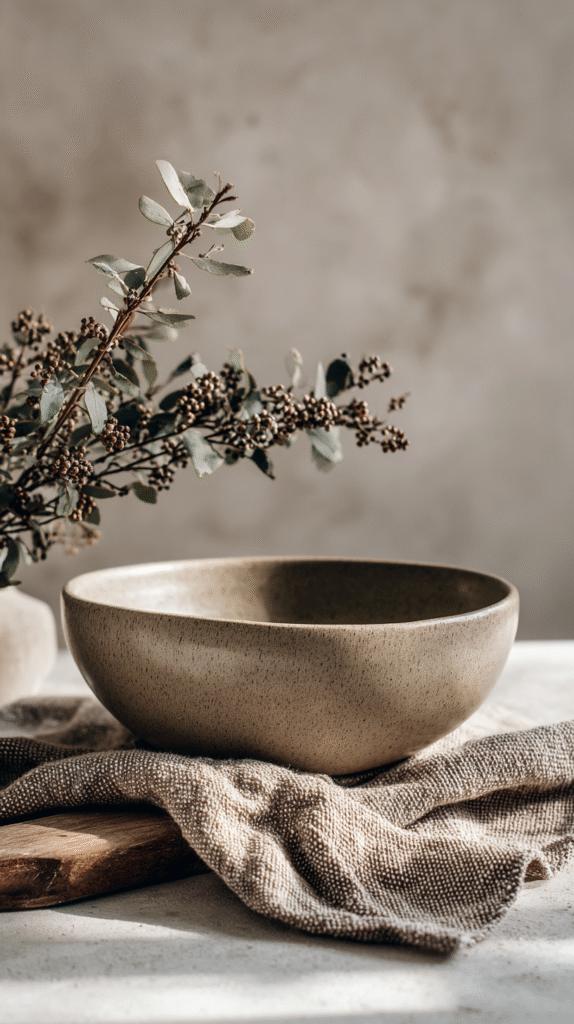
Layering textures adds warmth, but it must be done intentionally to remain minimalist. The goal is to create depth without clutter. Each layer should support how you want the space to feel. Minimalism gives you the space; texture gives you the comfort.
Begin by pairing smooth and textured surfaces in the same room. This contrast creates a subtle sense of dimension. You can also use a few larger textured items instead of many small ones. It keeps the room uncluttered while still adding warmth.
Try these styling ideas:
- Pair a matte stone bowl with a woven linen napkin
- Fold a chunky wool throw neatly over the back of a wooden chair
- Add a wool or jute rug beneath simple, clean-lined furniture
- Place a single chunky knit cushion on the sofa instead of several smaller ones
These layers shift the energy of the room without overwhelming your senses.
Let Light and Texture Work Together
Texture comes alive through light. Natural light reveals grain, weave, shadow, and dimension. This interplay helps a minimalist home feel more inviting and grounded. Scandinavian and Japanese design traditions rely on this balance, allowing the room to feel calm and expressive at the same time.
Look at how light enters your home throughout the day. If heavy window treatments block it, consider replacing them with linen panels or sheers. This allows natural light to soften the textures in your space and enhance their warmth.
Consider these ideas:
- Choose linen or light cotton curtains that let daylight move through the room
- Use lampshades made of natural fibers that glow instead of glare
- Place textured items near windows or lamps to cast subtle shadows
- Avoid bright overhead lights that flatten the room’s natural dimension
When texture and light work together, your home feels more layered and alive.
Maintain Minimalism While Emphasizing Texture
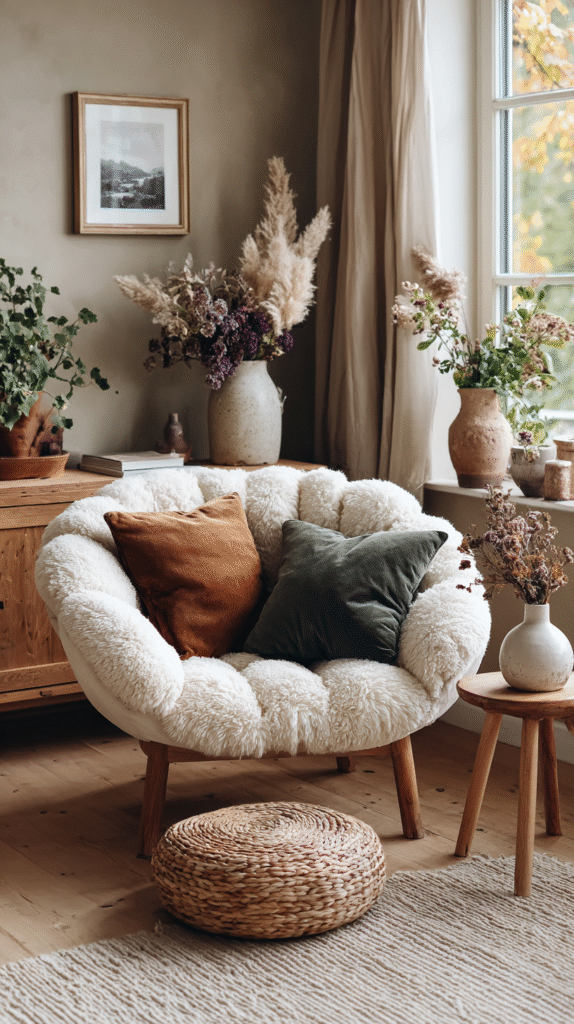
Cozy minimalist design requires balance. Too much texture can overwhelm the space, while too little can leave it feeling sparse. The goal is to find the middle ground where each piece has space to breathe and add meaning.
Edit your textures the same way you edit your decor. Bring in only what supports the feeling you want. Remove anything that distracts your eye or creates visual noise. This is where minimalism and comfort intersect in the most supportive way.
Try these texture-focused habits:
- Use no more than two or three textured materials in one room
- Keep a neutral color palette so textures integrate smoothly
- Leave negative space around textured items so they feel intentional
- Rotate textures seasonally to keep the home feeling fresh
These practices maintain the calm foundation of minimalism while allowing warmth to build.
Small Texture Swaps That Make Big Impact
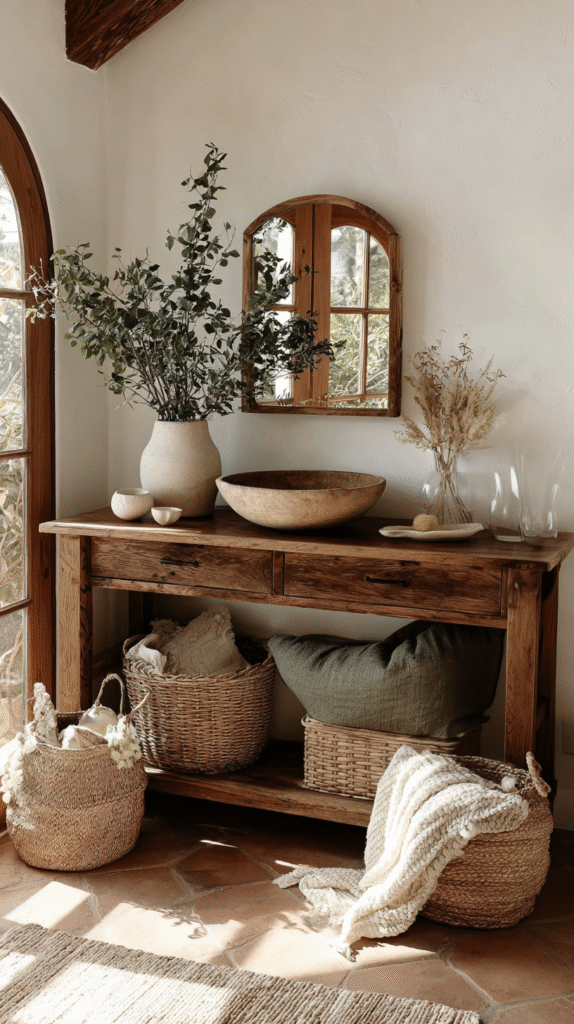
You do not need to redesign your entire home to bring in natural textures. Small swaps often create the biggest shifts. Replacing synthetic, glossy, or mass-produced materials with natural ones immediately changes how a room feels.
These changes support your desire for calm, especially on days when your home feels chaotic or disconnected from nature. They also align well with future affiliate opportunities without feeling sales-driven.
Consider these texture swaps:
- Replace a synthetic cushion with a linen one
- Switch a plastic tray for a wooden or stone alternative
- Add woven baskets instead of metal or plastic bin storage near an entryway
- Swap a smooth polyester throw for cotton or wool
- Replace a flat synthetic rug with a wool-jute blend
These small edits create sensory richness that supports the cozy minimalist aesthetic.
Closing Reflection
Texture helps your home feel alive, grounded, and comforting. When layered thoughtfully, natural textures become the foundation of a cozy minimalist home. They bring warmth without clutter, depth without noise, and a feeling of presence that helps your nervous system settle after a long day.
Begin with one material or one swap. Notice how it affects the atmosphere and your sense of ease. Over time, texture becomes the subtle thread that ties your minimalist home into a true sanctuary.

