
This post may contain affiliate links, including those from Amazon Associates. If you make a purchase through these links, I may earn a commission at no additional cost to you. Learn more about our affiliate policy.
There are days when your home feels louder than it should. You walk in after work or a long afternoon and immediately sense the visual clutter, the busy corners, the furniture that asks for more than it gives.
You crave the clarity of minimalism because it promises mental breathing room, yet you also crave the comfort of warmth and coziness. It can feel like you have to choose between the two.
Cozy minimalist design shows that you do not.
This approach blends the calm of an edited space with the comfort your nervous system longs for at the end of the day. It supports slower pacing, visual ease, and a lived-in feeling without overwhelming your senses.
Cozy minimalism works especially well for those who want a home that holds them after overstimulating days, without becoming a project they cannot maintain. With a few intentional shifts, your home can feel aligned with both calm and comfort.
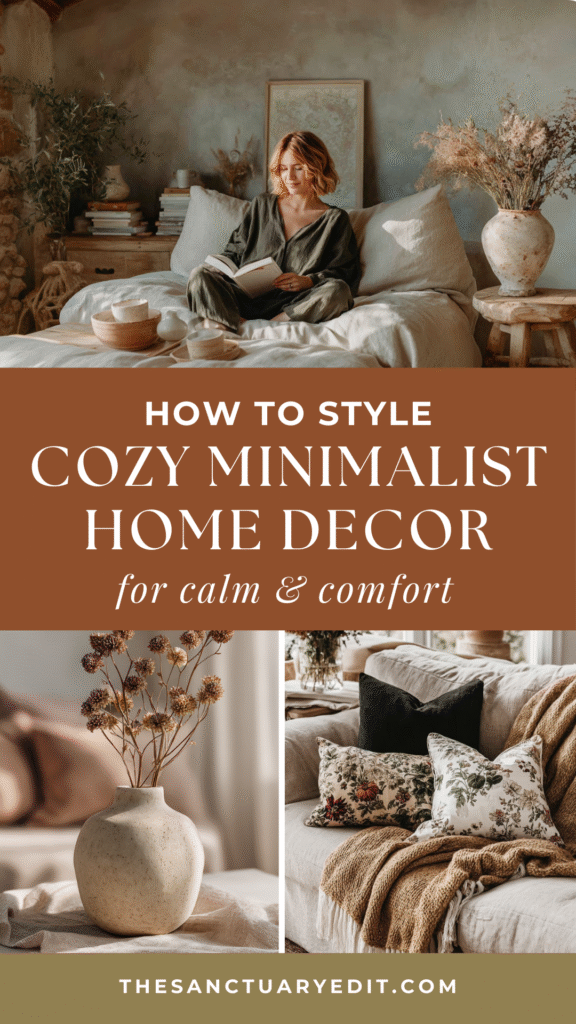
Clarify Your Purpose: What Minimalism Means For You
Minimalism often gets reduced to stark rooms and empty surfaces. For many of us, especially those navigating burnout or sensory overload, that version feels unrealistic or cold. Cozy minimalism is different. It is about presence, intention, and emotional clarity.
It is about removing distractions so your home supports you instead of draining you.
Begin by asking what minimalism means in your current season. You might want fewer visual demands, more breathing room, or simply a sense that your home reflects your real life instead of the one you think you should have. Clarifying your purpose will help you decide what stays and what goes.
These questions can guide you:
- Which room feels hardest to relax in, and why?
- What items pull your attention or create mental noise?
- Where do you want your home to feel spacious, and where do you want warmth?
- What small ritual helps you settle, and how can your space support it?
These reflections give you a starting place that fits your lifestyle rather than a strict aesthetic rule.
Choose Fewer, Better Items With Texture and Meaning
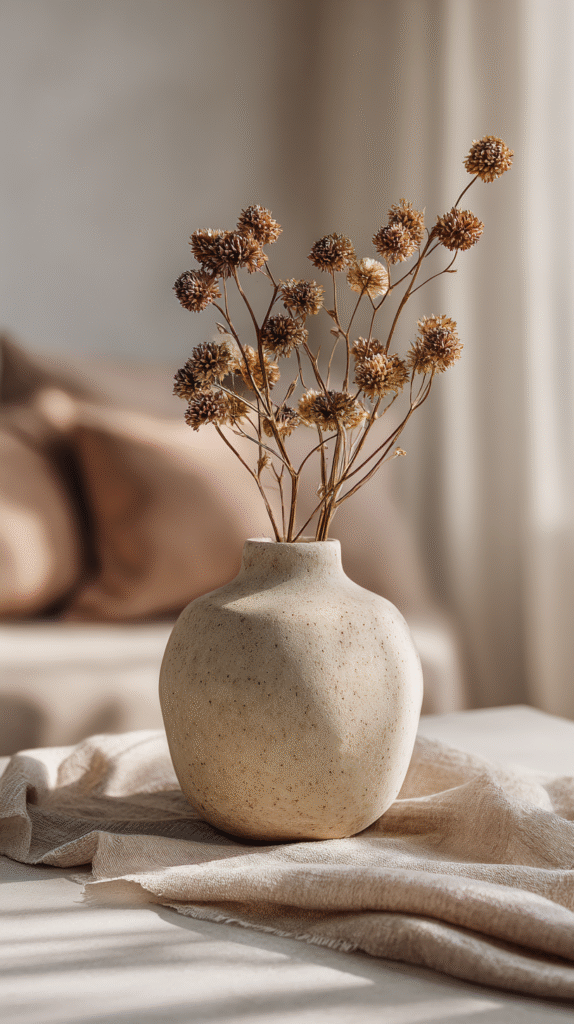
Cozy minimalism removes excess but keeps comfort. When you choose fewer items, each one becomes more meaningful. Textures, natural fibers, and pieces you genuinely love create warmth without crowding your space. This is especially helpful if you struggle with clutter anxiety or feel like your home constantly asks for maintenance.
Instead of filling a room with multiple small decor pieces, choose one or two items that carry presence. When placed with intention, they create more emotional depth than a room full of objects. Textures like cotton, wool, ceramic, and wood bring a grounded feeling that supports calm.
Try these steps:
- Keep only the items you use often or love seeing daily.
- Replace several small decorative pieces with one textured focal object.
- Add textiles that feel good under hand or eye.
- Choose a single throw or pillow that adds comfort without cluttering the space.
Your home becomes calmer because your mind processes fewer things. It becomes cozier because the items that remain actually support your well-being.
Build a Calm Base With Natural Materials and a Neutral Palette
A calm, neutral palette acts as a foundation for cozy minimalist design. It creates visual rest, something many women crave when they feel overstimulated or mentally overloaded. Natural materials within this palette add warmth and dimension, preventing the room from feeling flat or impersonal.
Start with one dominant neutral that feels grounding. Warm whites, beige, stone, sand, mushroom, and muted greys are all supportive. Once you choose a base, layer natural materials that carry subtle texture. These layers bring comfort without adding clutter.
A nature-rooted palette might include:
- Light or medium-toned wood accents
- Linen or cotton in muted tones
- Stone or matte ceramics
- One accent color that recurs sparingly through the space
This palette supports a sense of stillness in your home. It helps counterbalance the overstimulation of daily life and brings a feeling of ease the moment you walk in.
If you’re ready to design a whole room around serenity, explore the post on How To Create A Peaceful Small Bedroom Retreat With Natural Decor to see how natural materials and soft tones can transform a space.
Layer Comfort Through Texture and Warm Lighting
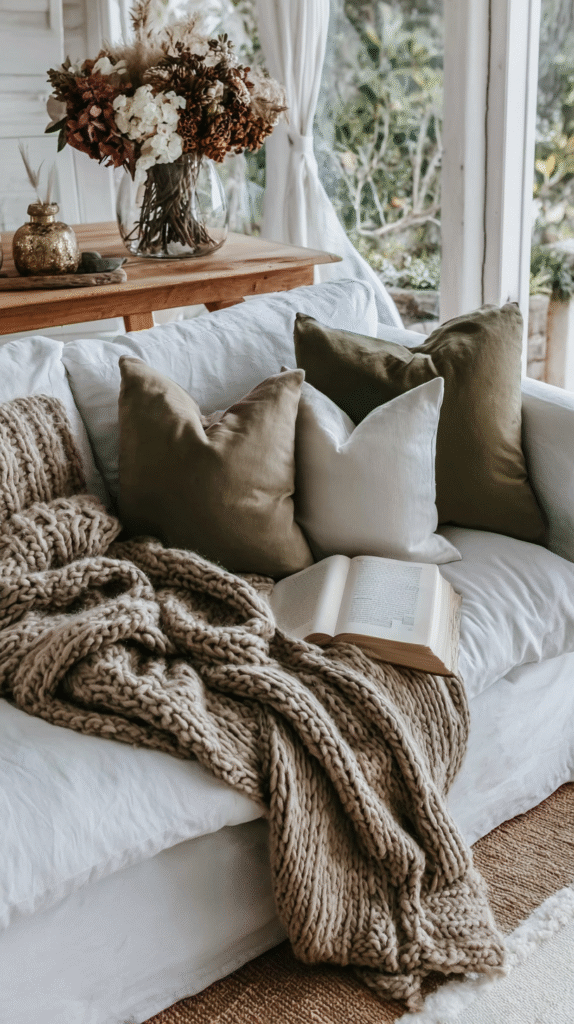
Minimalism can sometimes lean too stark if it lacks texture. Cozy minimalism solves this by layering tactile and natural materials that add comfort without heaviness. Lighting then shapes the mood, shifting your home into a more relaxed rhythm that helps the nervous system unwind after a long day.
Instead of adding more objects, focus on adding dimension. One textured blanket, a wool rug, or a woven basket can warm the room. The key is balance. You want enough texture to feel cocooned, not overwhelmed.
Lighting is equally important. Overhead fixtures keep your body on alert. Lower lighting signals that it is time to settle.
Try these cozy minimal strategies:
- Place one warm-glow lamp at table height
- Keep a wool or boucle throw folded on the sofa
- Add a jute or cotton rug for grounding texture
- Use a small basket for blankets or essentials
- Light a candle in the evening to transition the atmosphere
These layers create comfort while keeping the room visually calm.
For more ideas on softening your home’s energy with light, texture, and small swaps, check out Easy Slow Living Home Swaps That Calm Your Nervous System.
Edit Distractions and Honour Purposeful Spaces
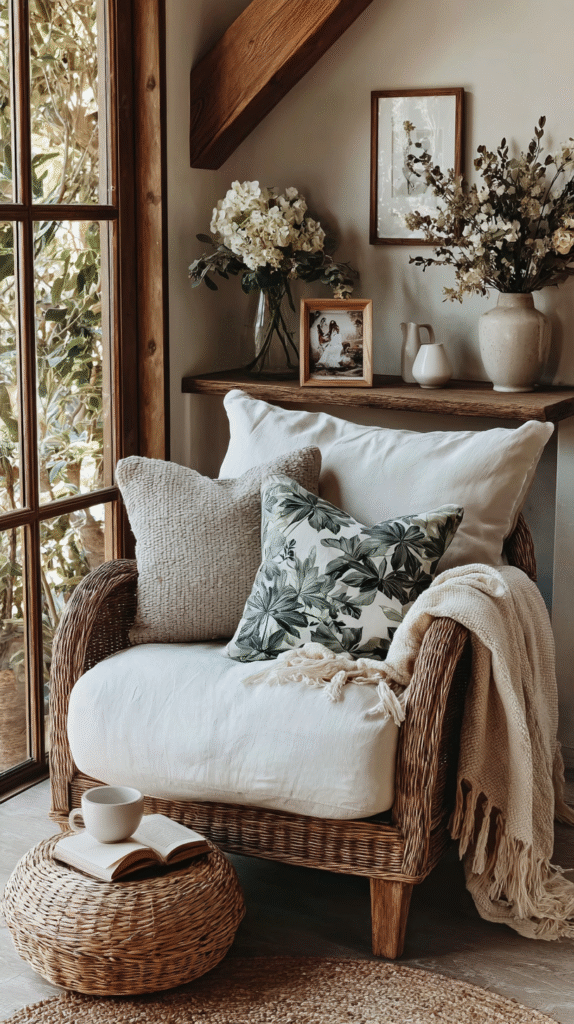
Comfort cannot be felt when distractions overwhelm your senses. Cozy minimalism invites you to edit what competes for your attention and to create purposeful spaces that support your rituals.
When every item has a purpose, your home becomes easier to maintain and more emotionally supportive.
Choose one surface as your starting point. It could be a coffee table, console, or nightstand. Clear everything from it and add only what feels essential or comforting. This small action often brings immediate relief.
Guiding practices:
- Keep high-traffic surfaces free from excessive decor
- Limit visible tech by storing remotes, chargers, or devices
- Designate one “pause” space with a chair, throw, and lamp
- Make pathways clear so movement feels steady and unobstructed
Your home begins to feel like a sanctuary because your senses are no longer overstimulated.
Invite Personal Quiet Luxury Through Meaningful Details
Cozy minimalism never removes personality. It simply highlights what matters most. Meaningful details create a sense of personal luxury, not through price but through emotional connection. These details help your space feel lived in and authentically yours.
Choose items that feel rooted in your life. A handmade bowl, a textured mug you reach for every morning, or a framed photo that brings calm when you look at it. These pieces add warmth and presence without cluttering the room.
You might include:
- A ceramic cup or bowl you love using
- A single framed photo in a simple frame
- A natural element like a branch or seasonal greenery
- A candle scent that signals the shift from day to evening
These details become emotional anchors in your space. They help create a sense of comfort that minimalism alone cannot provide.
If cozy minimalism is speaking to you, you may also enjoy the post How To Start A Slow Living Home One Room At A Time. It offers a gentle, step-by-step path to a more peaceful home.
Closing Reflection
Blending calm and comfort with cozy minimalist design is less about style and more about alignment. It is about crafting a home that reflects what you need most: less noise, more presence, and an atmosphere that supports your nervous system.
When you choose fewer, meaningful items, layer texture with intention, and allow light to shape the room, your home becomes a quiet companion in your daily life.
Begin with one small change. Clear a surface, swap one throw, or shift the lighting in a single room. Notice how your body responds. Cozy minimalism unfolds naturally through these small, steady decisions, creating a home that feels both spacious and comforting.

