
This post may contain affiliate links, including those from Amazon Associates. If you make a purchase through these links, I may earn a commission at no additional cost to you. Learn more about our affiliate policy.
Some evenings your living room feels louder than it should. The light is sharp, the cushions look tired, and the day’s pace still lives in the corners.
When you already feel overstimulated, even a small room can seem crowded with unfinished tasks and visual noise. This is where neutral decor becomes a source of ease. A pared-back palette, chosen with care, can steady your mind and create a sense of grounded openness.
Neutral does not mean bland or cold. It can be a warm base that helps your nervous system settle. With simple edits, texture, and natural materials, a small living room becomes a place your eyes can rest.
These ideas are designed for real homes, real time constraints, and the moments when you crave clarity more than perfection.
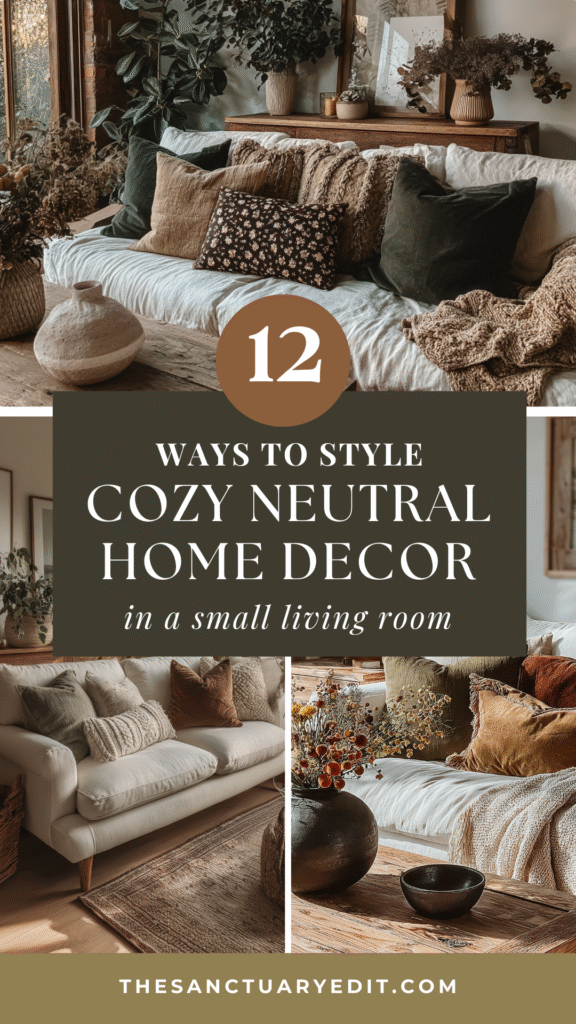
Choose a Warm Neutral Palette
A warm palette gives your room a calm foundation. Shades like cream, oat, earthy rust, mushroom, and warm white bring a sense of openness without feeling stark. They make small spaces feel less cramped and allow your decor to breathe.
When a room holds too many competing tones, your attention scatters. A cohesive palette eases that pull and helps your body relax the moment you settle in. If your walls are cool or gray, consider shifting toward warmer neutrals that reflect natural light and soften the mood.
A few ideas to start:
- Cream or warm white paint with a hint of beige
- Taupe or earthy forest green accents through pillows or throws
- Lighter neutrals on larger pieces like sofas, keeping depth in smaller accents
If you’re curious how simple materials and calm tones transform a busy home into a sanctuary, check out the post on How To Start A Slow Living Home One Room At A Time.
Layer Textures for Depth and Comfort
Texture is where neutral decor comes alive. Without it, a minimal palette can feel flat. When you layer natural fibers, your room gains dimension and a welcoming energy.
Think about how the materials feel. Linen curtains that move with the afternoon breeze, a wool throw that adds weight across the back of a sofa, a nubby rug underfoot.
These details shift the room from “styled” to lived-in, which is often what we crave when our days has been full of screens and decisions.
Useful textures to mix:
- Linen or cotton curtains
- Wool or boucle cushions
- Jute or woven rugs
- A knit throw across the arm of a chair
For more ways to mix natural fabrics, light, and earthy elements across a whole home, read 9 Affordable Hygge Home Decor Swaps That Invite Coziness.
Bring in Natural Materials and Wood Accents
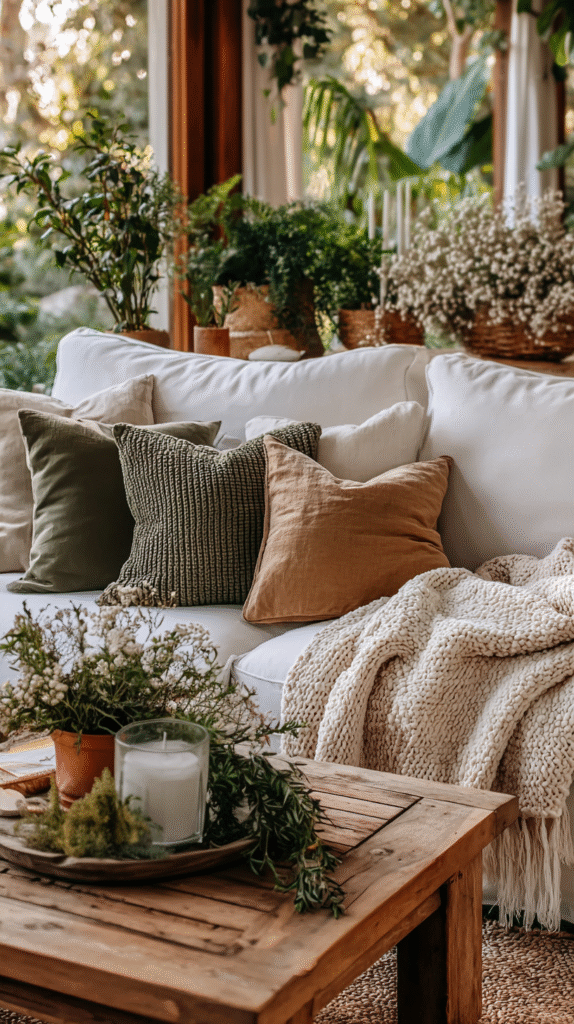
Natural materials ground the room and help you reconnect to your senses. Wood, rattan, stone, and woven pieces offer warmth without adding visual weight.
Small living rooms especially benefit from materials that feel organic. They introduce depth without clutter and shift the atmosphere toward something more restful. Wood tones are particularly supportive when your home feels overstimulating. They pull your attention down from the mental noise of the day and into the present moment.
Ways to incorporate them:
- A wood coffee table or side table
- A woven basket for blankets
- Stone coasters or a ceramic vase
- A rattan tray on your ottoman or shelf
Let Natural Light Set the Tone
Light shapes the way a room feels long before color or furniture does. When you let natural light move through the space, the room softens and expands.
Avoid blocking windows with heavy drapes or tall furniture. Instead, choose window treatments that filter the light without dimming it. Sheer curtains, simple Roman shades, or bare windows in private spaces keep the room open and calm.
Small shifts that help:
- Pull furniture a few inches away from the window
- Use warm white bulbs in the evening to create an inviting atmosphere
- Keep windowsills clear so light can spill into the room
Choose Furniture with Light Visual Weight
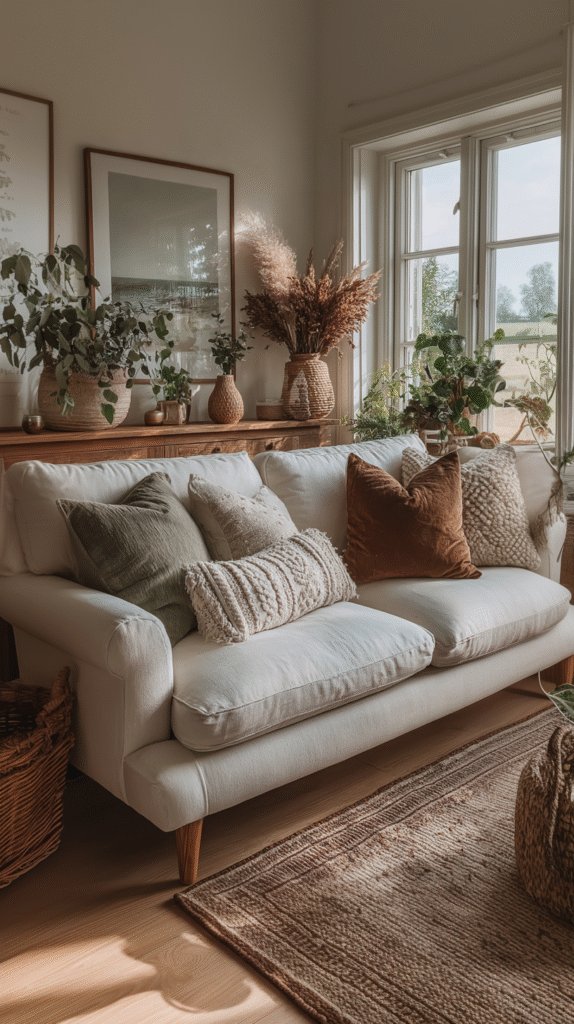
In a small living room, bulky furniture quickly creates a sense of overwhelm. When pieces have clean lines and space beneath them, the room feels larger and easier to settle in.
This approach also reduces visual clutter. Your mind has fewer shapes to process, which gives you the clarity you often go searching for on Pinterest. It becomes less about having the perfect layout and more about creating enough breathing room for your body to release the day.
Look for:
- Sofas or chairs with exposed legs
- Slim or rounded side tables
- Storage that blends into the palette
- A coffee table that allows clear sightlines across the room
Use Rugs to Anchor the Space
A rug brings the room together and helps define where you rest and gather. It is one of the simplest ways to add warmth without adding clutter.
Choose a rug in a warm neutral that complements your palette. If your living room is especially small, a larger rug often works better than a small one. It visually expands the space and reduces the number of breaks on the floor.
Consider:
- Jute or flatweave rugs for natural grounding
- Layering a smaller textured rug over a simple base
- Choosing a pattern with subtle variation for depth
Soften the Room with Layered Lighting
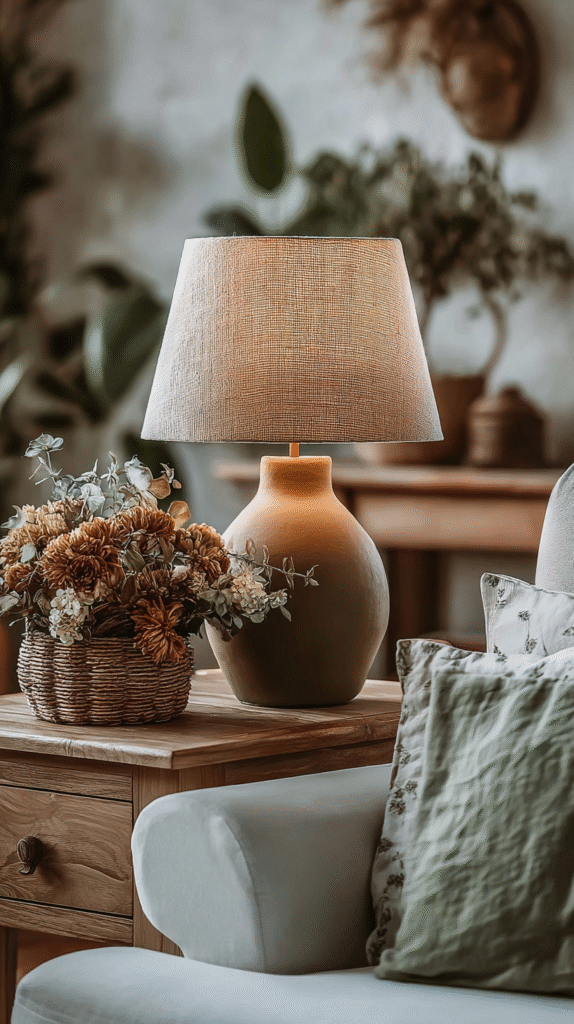
Lighting changes your nervous system instantly. Overhead lighting can feel sharp after long days, especially when your mind already feels crowded. Multiple light sources bring calm and a sense of presence.
A floor lamp near the sofa, a table lamp by a reading chair, or even candlelight in the evening shifts the tone of the entire room. These layers create a warm glow that holds you rather than energizes you.
Try adding:
- A warm-toned table lamp on a dimmer
- A floor lamp with a fabric shade
- Candlelight for evening rituals or rest time
Add Cozy Textiles and Thoughtful Accessories
Small additions often create the greatest emotional shift. Pillows, blankets, or a single new cushion cover can transform the way your space feels when you walk in the door.
Since your palette is neutral, focus on variation in texture rather than color. A linen pillow beside a boucle cushion creates harmony without visual noise. A folded throw across the arm of a sofa makes the room feel cared for and lived in.
Keep accessories curated:
- A ceramic bowl holding everyday items
- A stack of books that reflect your interests
- A textured throw for evenings on the sofa
If you want to extend this neutral-living room approach to other parts of your house, the guide How to Style Natural Textures for a Cozy Minimalist Home offers practical, room-by-room ideas.
Add Contrast with Warm Metallics or Dark Accents
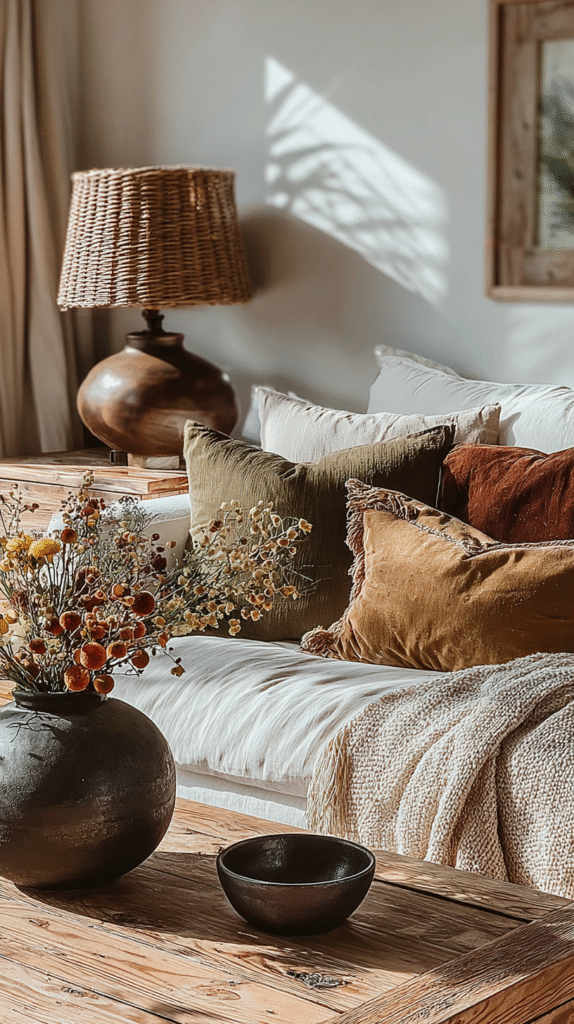
A neutral palette benefits from contrast. Without it, the room can feel monotone. Introducing a few darker or metallic accents adds depth and anchors the space.
A dark wood frame, a bronze lamp, or a charcoal vase gives the eye a place to rest. These subtle contrasts make a room feel layered and intentional, even when the decor remains simple.
Ideas for contrast:
- A matte black picture frame
- Bronze or brass knobs on storage pieces
- A charcoal bowl on the coffee table
Keep Surfaces Clear and Clutter Intentional
Clutter is one of the biggest contributors to daily overwhelm. Even when your decor is beautiful, too many items in a small space create a constant tug on your attention.
Instead of aiming for perfection, focus on clarity. When you clear even one surface, the room shifts. Your nervous system can finally catch up with you, offering the exhale you crave at the end of the day.
Supportive choices:
- Choose one or two decor pieces per surface
- Use baskets to corral daily items
- Keep pathways open and easy to navigate
Be Mindful with Scale and Layout
Scale shapes the way a small room feels. When pieces are balanced, the room functions effortlessly. When they are too large or too many, the space feels crowded and heavy.
Float furniture when possible. Even a few inches from the wall can create a more open feel. Arrange seating to face a window, artwork, or each other so the room invites conversation and rest.
Ideas to try:
- Keep at least one corner visually open
- Choose a loveseat or apartment-sized sofa
- Add a single accent chair instead of two
Add Personal Pieces with Meaning
Neutral decor becomes warm when it reflects you. Personal items bring authenticity to a space that might otherwise feel styled or impersonal.
You do not need many. A plant you water each week, a framed photo, a ceramic dish from a trip, or a book that inspires you can shift the emotional tone of a room. These pieces help ground you when life feels rushed and remind you that your home can be a refuge.
Thoughtful choices:
- A simple vase with greenery
- Books that calm or inspire
- A candle you light during your evening reset
Closing Reflection
Creating warmth in a small living room does not require a major transformation. It begins with choosing a palette that soothes you, letting light find its way through the space, and adding textures that feel grounding at the end of a long day. Each edit builds on the last, forming a room that supports your wellbeing rather than competing for your attention.
Start with one idea. Give the room time to shift around it. Over time, these small changes form a space that holds you with ease, offering the calm you have been craving.

