
This post may contain affiliate links, including those from Amazon Associates. If you make a purchase through these links, I may earn a commission at no additional cost to you. Learn more about our affiliate policy.
A bedroom can either hold the day’s weight or release it.
When surfaces are busy and colors feel sharp, the nervous system stays on alert.
But when the room softens with light, texture, and natural rhythm, your body remembers how to rest. These small refreshes don’t require a renovation.
They invite you to create a space that feels cozy, grounded, and deeply yours.

Layer Textures and Natural Materials
Texture tells the body it can let go. A smooth oak nightstand beside crumpled linen sheets, a wool throw resting across the bed, a jute rug under bare feet. These contrasts make the space feel more alive, while anchoring you into calm.
Simple ways to add grounding texture:
- A linen throw across the bed or bench
- A woven basket filled with blankets
- A stone or ceramic vessel that catches natural light
Each piece becomes a quiet invitation to rest.
Choose a Warm, Grounding Palette

Color is mood. Muted terracotta, olive, and clay bring the earth into the room.
Deeper shades like moss green or chestnut root the space in stability, while soft creams and warm whites prevent heaviness. Together, they create balance, grounded but not closed in.
You might paint a single wall in a warm tone, or layer muted pillows over a soft beige duvet. Even the smallest shift in color harmony can change how your bedroom holds you at the end of the day.
Refresh with Ambient Lighting
Harsh light keeps the body alert, while soft light signals ease. A bedroom feels most grounding when the light is layered — table lamps, sconces, or string lights casting a quiet glow. Evening light should soften edges and help the nervous system move from doing into resting.
Options that create calm lighting:
- Warm-toned bedside lamps
- A soft string of fairy lights
- Beeswax candles for evening ritual
- A diffuser with gentle glow and natural scent
Light becomes less about function and more about atmosphere.
Declutter with Gentle Subtraction
Visual noise is nervous system noise. Piles on the dresser or stacks of books by the bed pull at your attention even when you want to rest. Instead of a marathon declutter, try subtraction. Clear one surface, then live with the emptiness for a day. Notice how your body feels when you enter the room.
Bring back only what you need or love, a lamp, a single book, a branch in a vase. The absence of clutter becomes a form of calm design, a pause that lets the eye and mind breathe.
Add Nature-Inspired Accents
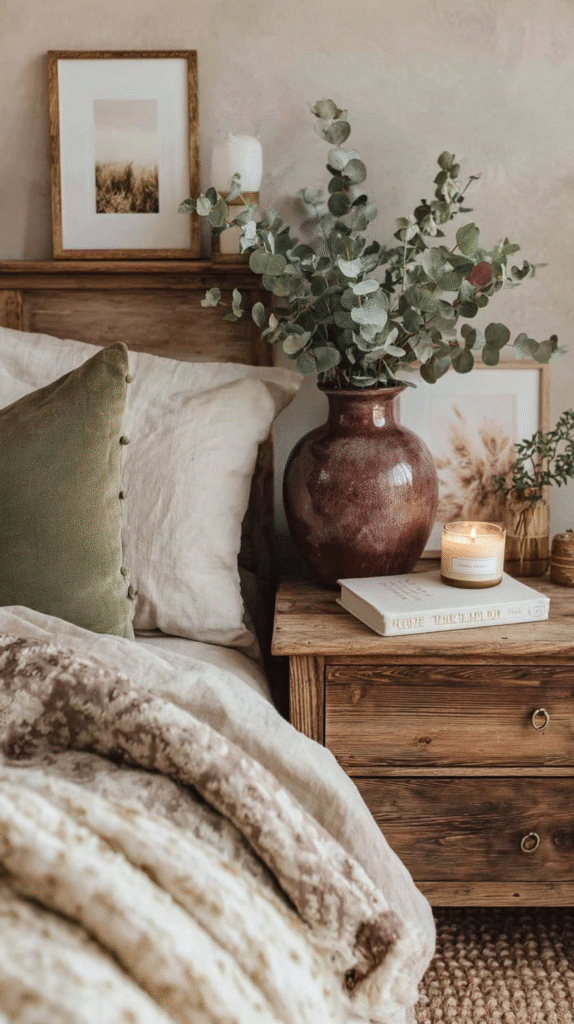
Grounding often comes through connection with the natural world.
A few sprigs of eucalyptus in a ceramic vessel, a leafy plant in a clay pot, or a piece of driftwood set on a shelf. These elements bridge indoors and outdoors, reminding the nervous system of slower rhythms.
Nature accents don’t have to be styled. A simple branch gathered on a walk, placed casually in a jar, brings more calm than a perfectly curated arrangement.
The goal is connection, not performance.
Create a Cozy Reading or Rest Nook

A bedroom can hold more than a bed. A small corner with a chair, layered pillows, or a soft floor cushion becomes a personal retreat within the retreat. Add a lamp with warm light and a basket for books or journals.
This nook doesn’t need to be large. It simply signals to your mind: here, we slow down. Having a defined space for reading or quiet reflection invites the kind of rest that goes beyond sleep.
Dress the Bed in Layers
The bed is the center of the room, and layering makes it both functional and inviting.
Consider:
- Breathable sheets in cotton or linen
- A duvet for warmth
- A folded quilt or textured throw at the end
- A mix of pillows in muted tones
When you climb into bed, the sense of being enveloped by softness tells your body it is safe to rest.
Place Grounding Rugs Underfoot

Stepping onto a cold floor can jolt the body awake. A soft rug changes that first morning sensation into something nurturing.
Natural fiber rugs like wool or jute carry a grounded texture, while faux fur adds softness for winter months.
Even in a small bedroom, a runner beside the bed can change the whole experience of waking and winding down, and creating a peaceful small bedroom retreat with natural decor takes that idea across the entire room. Each step becomes an invitation into warmth.
Balance Visual Calm with Color and Pattern
Too much visual busyness overstimulates. Yet too little can feel flat. The key is balance. Choose one or two soft patterns — a striped throw, a muted floral pillow — and let the rest of the palette remain quiet.
Keep tones harmonious so the room feels cohesive. Muted greens, soft corals, or earthy neutrals offer gentle variety without noise. The eye should find rest, not work.
Create Tech-Free Rituals
Screens carry stimulation. A phone on the nightstand signals activity, not rest. Consider keeping devices outside the bedroom, or setting up a small ritual space instead.
Simple low-stimulation anchors:
- A candle to mark the shift into night
- A carafe of water and a glass
- Fresh flowers or a small bowl for jewelry
- A favorite book within reach
Night becomes about slowing, not scrolling.
Closing Reflection
Your bedroom doesn’t need a dramatic makeover to feel different. Small edits like a softer light, a warm texture, a cleared surface, shift the whole atmosphere.
Choose one or two changes and let yourself notice how the room feels after. A bedroom that grounds you is not a project to finish, but a space to keep softening into.
When the room supports your nervous system, rest comes more naturally. And rest is the most beautiful refresh of all.

