This post may contain affiliate links, including those from Amazon Associates. If you make a purchase through these links, I may earn a commission at no additional cost to you. Learn more about our affiliate policy.
I’ve stood in the doorway of a cluttered room and felt my chest tighten.
Every surface asked something of me, the mail stacked on the counter, the clothes waiting on the chair, the drawer that barely closed.
It wasn’t just clutter; it was noise. And in those moments, even the thought of tackling it all felt impossible.
If you’ve ever felt that weight, know this: decluttering doesn’t need to be an all-or-nothing project. It doesn’t have to leave you drained or frustrated.
With the right approach, it can feel like a quiet release. Small edits that create breathing room. Steps you can actually take, even when you’re at capacity.
This isn’t about having the perfect home. It’s about creating space that feels calmer to live in. Here’s how to start decluttering your house without overwhelm.
Key Takeaways
- Clutter carries emotional weight, not just physical mess. Understanding that makes it easier to begin.
- Starting with one small, visible area builds momentum without draining your energy.
- Simple frameworks like the 1-3-5 rule or the 7-day cleanse make the process feel manageable.
- Progress matters more than perfection. Even five minutes counts.
- Sentimental items don’t have to be decided right away. Work up to them.
- Small daily habits prevent clutter from rebuilding over time.
- There is no finish line. Decluttering is an ongoing, gentle practice.
Acknowledge the Weight of Overwhelm
Before you clear a single drawer, it helps to name what’s really happening.
Clutter isn’t just about objects. It’s about the energy those objects carry, the decisions you haven’t made, the routines that slipped, the life transitions that left traces behind.
That’s why a messy counter can feel heavier than it looks. You’re not just looking at papers. You’re looking at unmade choices.
Acknowledging this softens the guilt. It’s not that you’ve failed, you’re just a human living in a fast world.
By giving yourself permission to see clutter as emotional weight, you free yourself to take smaller, kinder steps forward.
Start Small and Visible
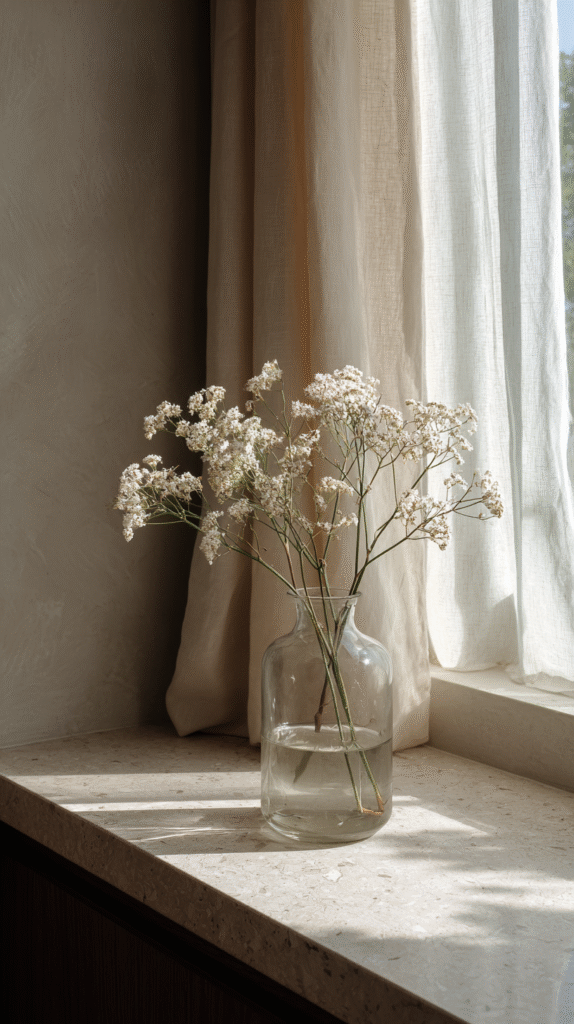
Overwhelm often comes from thinking we need to fix everything at once. The truth is, momentum builds when we start with one visible shift.
Choose a small, contained space. A nightstand. A bathroom drawer. The corner of the kitchen counter where mail piles up.
When you clear just one spot, you give yourself a visible win, and your nervous system feels the difference immediately.
I like to think of this as a mini-reset, and if you want a repeatable version of that, a 15-minute daily decluttering routine for instant calm can give you that same rhythm without the pressure of a bigger project.
The sight of a calm corner creates energy to keep going, if you want to, or to rest knowing you’ve already made progress.
Set the Pace With Structure
Some days you’ll have energy for more, other days you won’t. The key is to give yourself a gentle framework.
One option is the 1-3-5 rule: choose one big task, three medium tasks, and five small ones. That balance keeps you from overloading yourself while still creating movement.
Another approach is the clutter box. As you move through a space, place anything you’re unsure about in one container. You don’t have to decide right away. Set the box aside for a couple of days. When you come back, you’ll often find it easier to let go.
For those who like rhythm, try the 7-day cleanse. On day one, remove one item. On day two, remove two. By the end of the week, you’ve let go of 28 items without overwhelm.
Choose the structure that feels least pressuring. The point isn’t speed. It’s sustainability.
Embrace Progress, Not Perfection
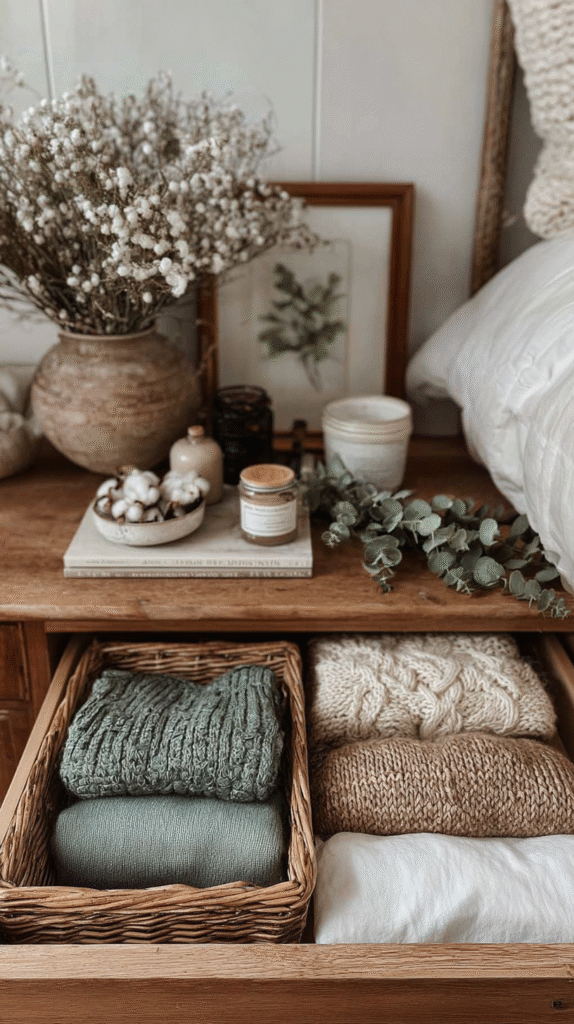
Decluttering can stir up perfectionism. You might feel pressure to finish the whole room, or shame if it doesn’t look like the styled homes you see online. Let that go.
Instead, focus on momentum. Even five minutes counts. Set a timer, let yourself do what you can, and then stop. You’ll feel lighter for having begun, even if the space isn’t “done.”
Keep a short list of tiny tasks you can tackle when energy is low.
Recycle expired papers.
Return one item to its home.
Wipe a surface clear.
Small completions compound into bigger shifts over time.
Want to go deeper on how to declutter without overwhelm room by room? Madisun Gray has a wonderful overview of her method that will walk you through getting started:
Hold Sentiment Gently
Not everything is easy to release. Some items carry memories, and the thought of letting them go can feel like erasing part of yourself.
Start with the simple clutter, duplicates, expired food, broken things, trash. Leave the sentimental items for later, when your confidence has grown.
When you do reach those harder objects, try a clutter vacation. Place them in a box, seal it, and mark a date a few months ahead. If you don’t need or miss them by then, it’s easier to let them go.
Another approach is to move through your home in passes. On the first pass, you release the obvious clutter. On the second, you make deeper choices. Each round is lighter than the one before.
Build Quiet Habits Into Daily Life
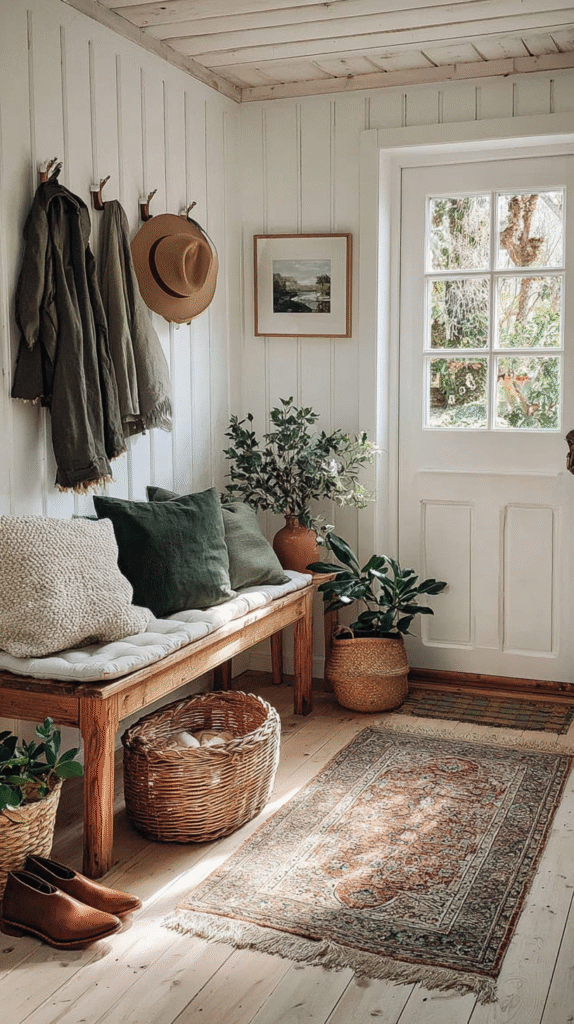
Decluttering doesn’t have to be a project at all. When woven into daily rhythms, it becomes less about effort and more about ease.
Try the “one in, one out” approach: every time something new comes in, something else goes out.
Designate drop zones for keys, mail, or bags so they don’t spread across surfaces.
End the day with a five-minute tidy. None of this requires hours of work. These habits keep clutter from re-building, and if you want a simple structure to lean on, 11 slow living habits that keep your home clutter-free are a good place to start.
Think of it as ongoing care for your home, not just cleaning. A way of tending to the space that holds you.
Allow Decluttering to Unfold Slowly
There’s no race here. Decluttering isn’t about emptying a house, it’s about aligning your home with your capacity and values.
Imagine it like the caterpillar method: slow, steady unfolding, one stage leading to the next. Some days you’ll make more progress, some days less.
What matters is the direction, not the speed.
By moving slowly, you also leave space for reflection. You begin to notice what supports your nervous system, what drains you, and how you want your home to feel.
A Pathway Back to Calm
Decluttering without overwhelm is possible when you release the idea that it must be all or nothing.
By starting small, choosing frameworks that feel supportive, and giving yourself permission to go slowly, you invite calm back into your home.
Your house doesn’t need to be perfect. It only needs to be supportive. One clear surface at a time, you’re building a space where you can exhale.