This post may contain affiliate links, including those from Amazon Associates. If you make a purchase through these links, I may earn a commission at no additional cost to you. Learn more about our affiliate policy.
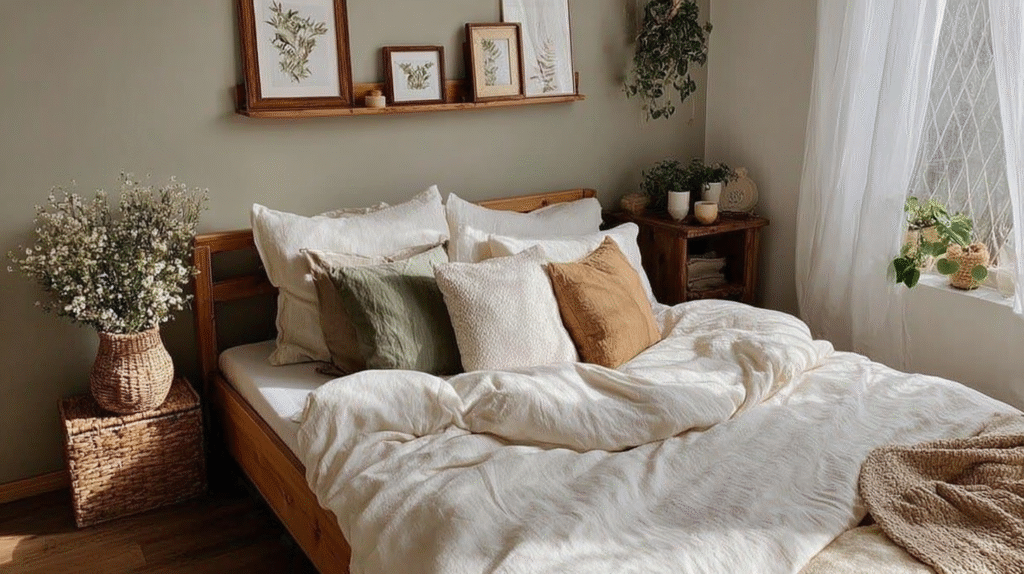
At the end of the day, your living room should feel like an invitation to exhale.
A space where the light softens, the textures welcome you in, and nothing competes for your attention.
These small edits help you create a room that supports your nervous system and feels truly restful.

Peace in a living room isn’t only about aesthetics. It’s about how the space affects your body, your breath, and your sense of groundedness.
Even a single corner can become a sanctuary when you approach it with intention. Each of these ideas is achievable in a day or less, making it easy to start now and build your calm over time.
Start by Clearing Visual Noise
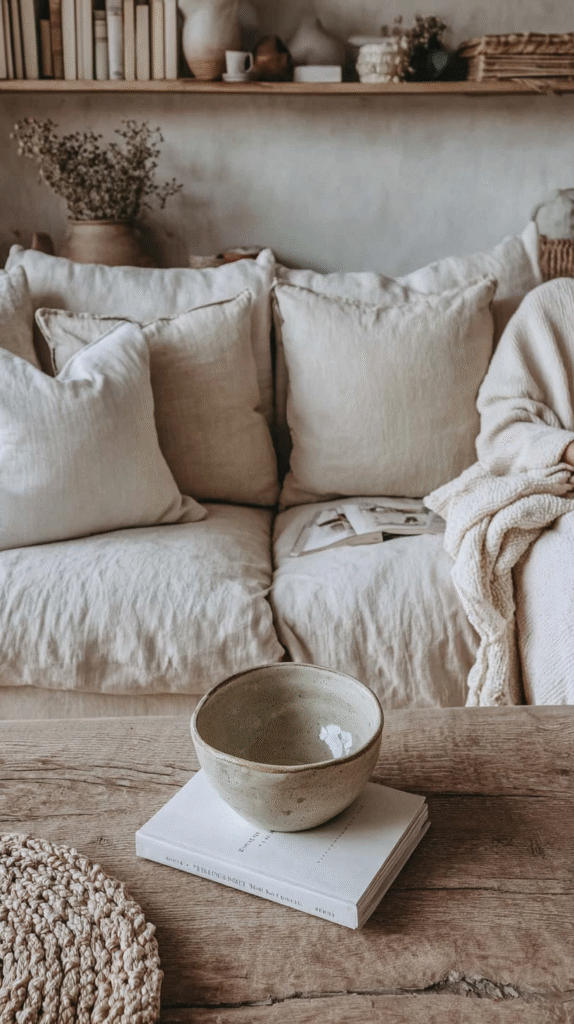
Your nervous system processes every object in your line of sight, whether you consciously notice it or not.
When surfaces are busy or cluttered, your brain works harder to filter the visual input, leaving you feeling restless and overstimulated.
Begin with the spaces you see most often. Clear the coffee table so there’s room for light to move across it.
Edit your shelves so there’s a balance between objects and open space. Store everyday items out of sight, keeping only a few intentional pieces in view.
This isn’t about extreme minimalism, but making space so your eyes, and mind, can rest.
Choose a Calming Color Palette
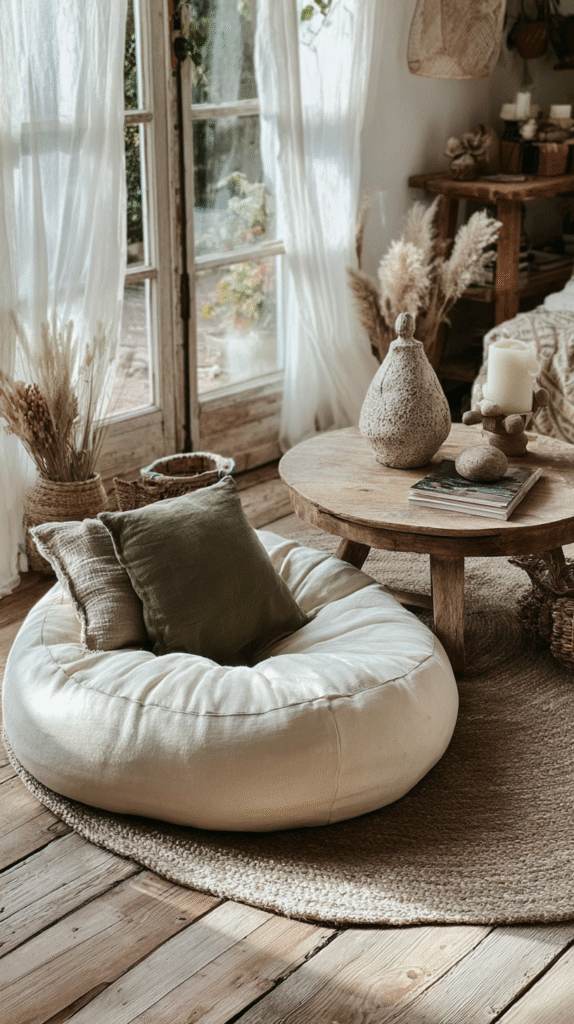
Color quietly shapes how we feel in a space. Soft neutrals, muted earth tones, and desaturated greens create a grounded backdrop that signals safety to your body.
They echo the tones found in nature, offering subtle reassurance each time you walk into the room.
If repainting isn’t possible, you can still shift the palette through a few thoughtful choices.
Replace a patterned throw with one in a warm beige. Hang curtains in natural linen that diffuse light.
Layer a textured rug in an earthy tone under the coffee table.
Over time, these layers harmonize, and the room begins to feel more cohesive and restful.


Layer Natural Textures
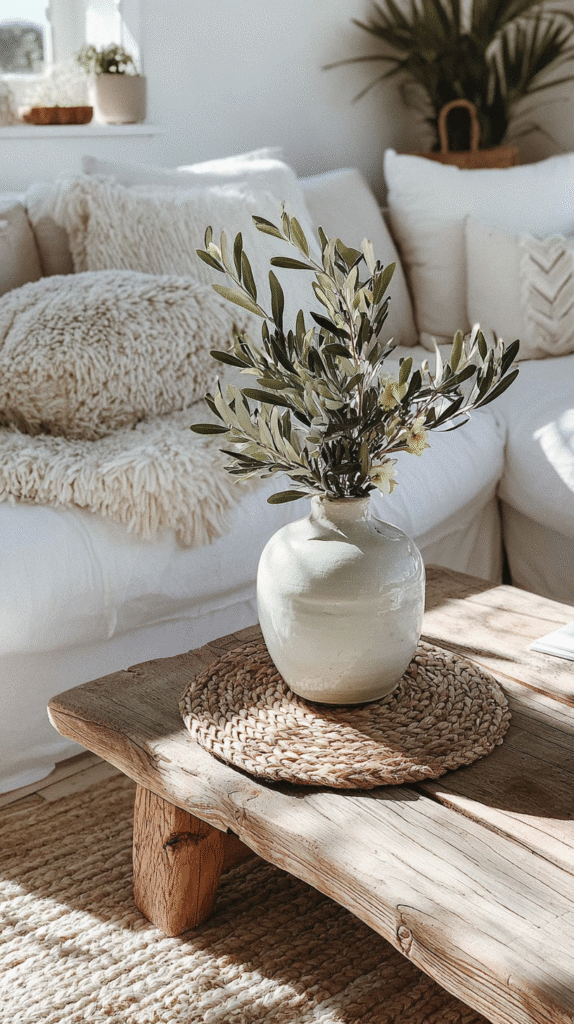
Texture adds warmth and depth without the visual busyness that comes from heavy patterns or excess ornamentation.
It also encourages you to engage with the room in a sensory way, which helps bring you back into the present moment.
You might:
- Add a linen or cotton throw over the sofa arm
- Place a ceramic vase with greenery on top of a wooden coffee table
- Place a wool rug underfoot to soften sound
- Introduce a rattan basket for storing extra blankets
- Use a simple ceramic tray to gather small items on the coffee table
Even a single change can shift the mood. Texture works quietly, softening edges and making the space feel more lived-in and human.


Adjust the Lighting for Evening Calm
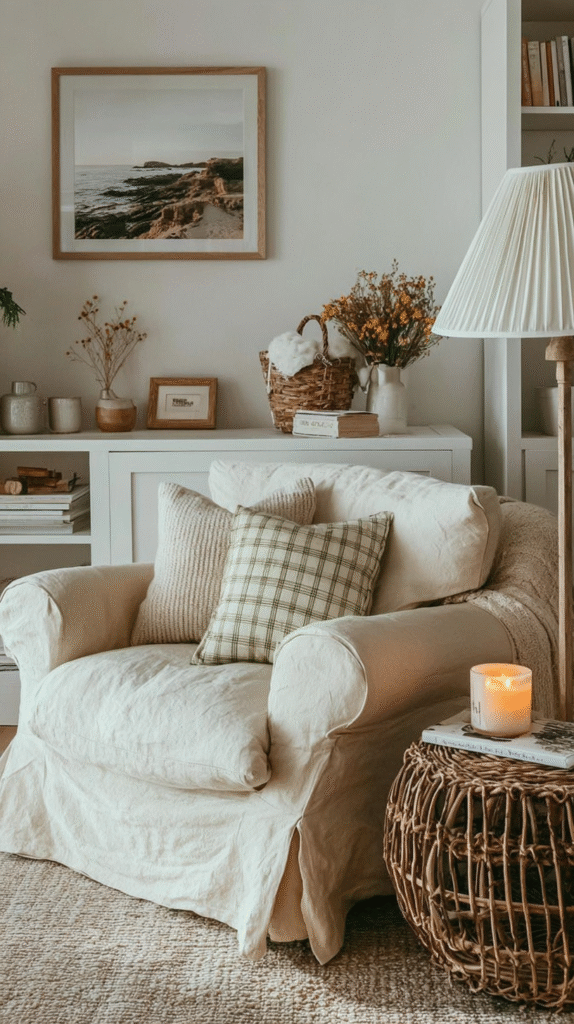
Light is one of the fastest ways to transform how a room feels. Harsh overhead bulbs keep your body in an alert state, while softer, layered light cues your nervous system to unwind.
Swap out cool-toned bulbs for warmer options.
Add a floor lamp in a dim corner to create a gentle pool of light.
In the evening, turn off the ceiling light and let table lamps take over, casting a more diffused glow.
Candles can also play a role here, their flicker draws your attention into the present, slowing your thoughts and softening the atmosphere.

Incorporate Live Greenery
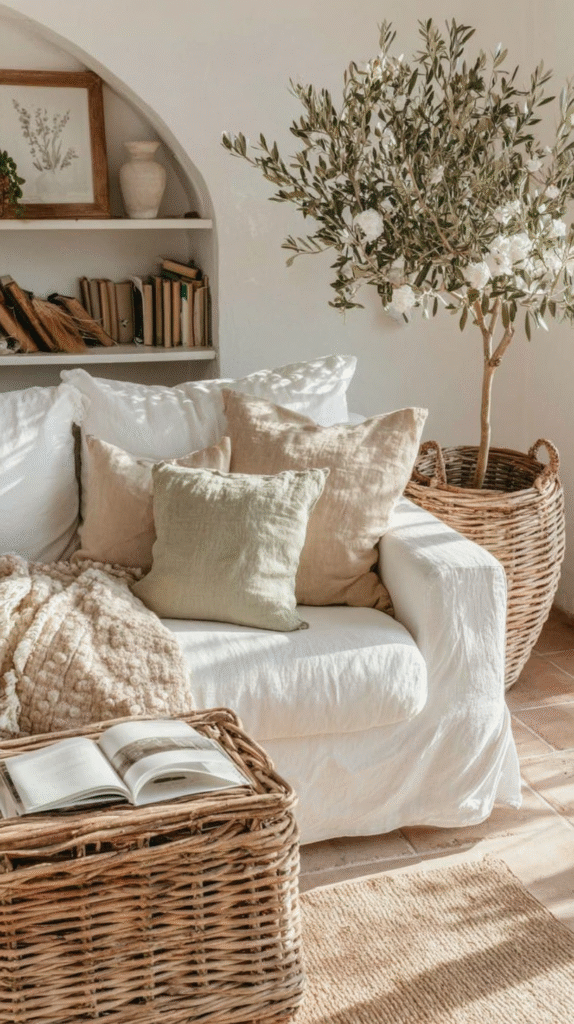
Plants bring movement, texture, and life to a living room in a way no other element can.
They act as natural focal points, drawing the eye without demanding it, and their organic forms break up rigid lines in furniture.
Start small if you’re new to plant care. Explore some easy-to-care-for indoor plants that will thrive with minimal attention. A snake plant in a neutral pot can thrive with minimal attention. A trailing pothos on a high shelf adds softness overhead.
If space allows, a single large floor plant in a woven basket can anchor an empty corner beautifully.
These living elements quietly shift the room’s energy, reminding you of the slower, steadier rhythms of the natural world.
Create a Comfort Zone
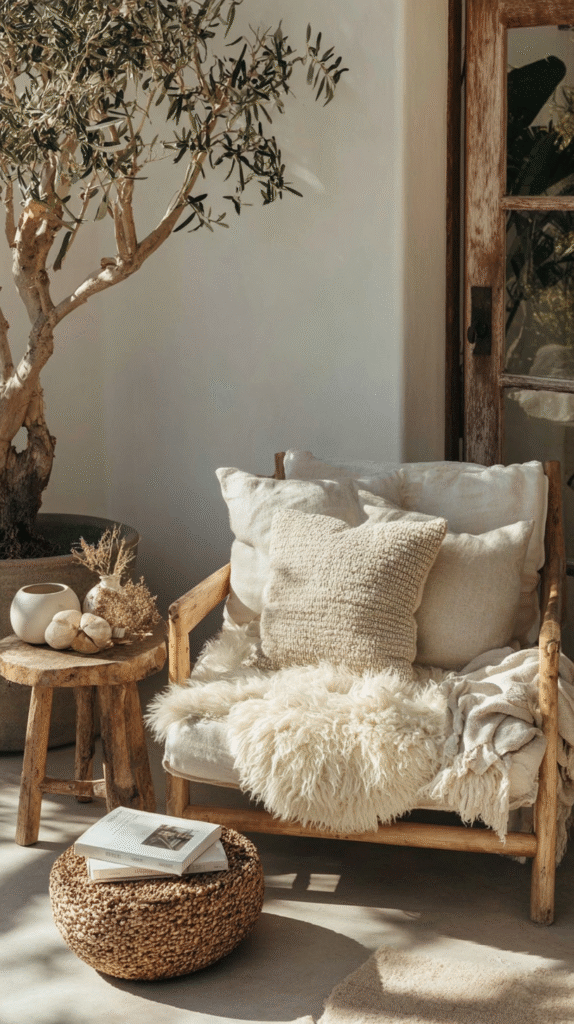
Every living room benefits from a designated place that signals rest the moment you see it.
This doesn’t have to be elaborate, just a consistent spot you return to when you want to unwind.
For some, it’s a chair tucked near a window with a throw draped over the back.
For others, it’s one end of the sofa, layered with pillows and positioned near a small side table for tea or a book.
Over time, this becomes your personal anchor in the space. The moment you settle in, your body remembers: this is where we slow down.
Infuse Scent and Sound
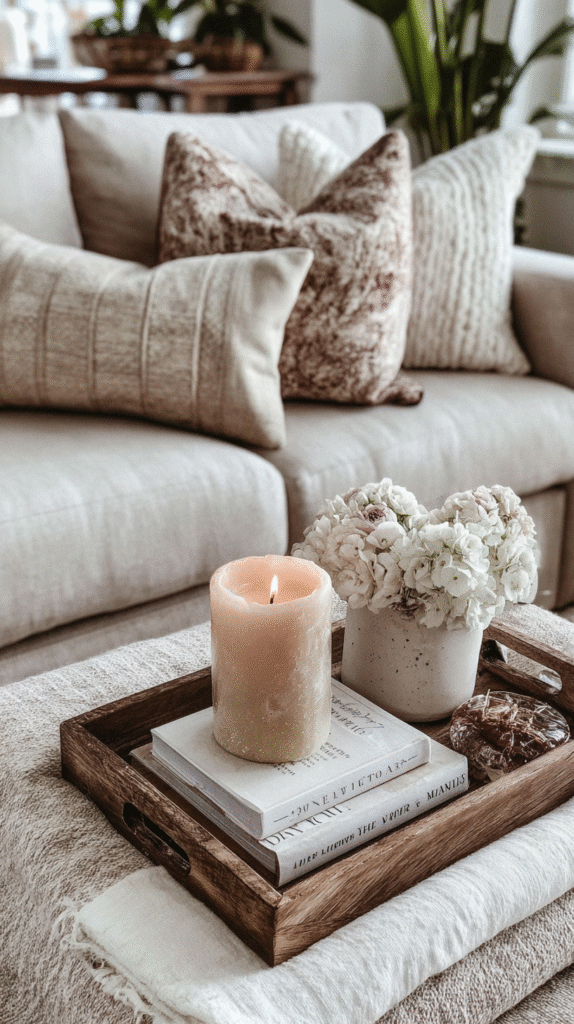
Scent and sound work on a level beyond thought. They can instantly transport you into a calmer state, or just as quickly pull you out of it.
Choose scents that feel grounding rather than sharp or overly sweet.
Lavender, cedarwood, and bergamot are gentle options that blend well with a relaxed atmosphere.
Diffuse them in the background, or light a natural wax candle so the aroma lingers softly.
For sound, think of it as setting an emotional tone. A quiet instrumental playlist, the rustle of leaves through an open window, or even a soft hum of white noise can wrap the room in a layer of calm that’s felt more than heard.

Closing Reflection
You don’t need to change everything to make your living room peaceful.
Choose one of these edits and let it settle before adding another. Over time, the shifts begin to layer, a calmer corner here, a softer light there, until the room itself becomes a steady, supportive presence in your day.
When you walk in and feel your shoulders drop without thinking about it, you’ll know you’ve created more than a beautiful space. You’ve made a living room that holds you, and helps you rest.